
Brodie Waddell
Sorting people into groups is something that we, as scholars, spend a lot of time doing. As Alexandra Shepard shows in her powerful recent book, Accounting for Oneself, it is something that early modern people constantly did too.
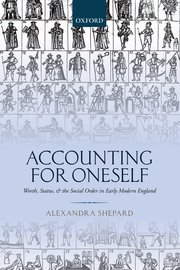 This is not the place for proper review of the book as there are already plenty of those available, including a substantial analysis by my co-blogger Mark. However, I would like to look slightly more closely at one particular aspect of the book which speaks directly to an issue that we have struggled with repeatedly on this blog: how do we divide up early modern society?
Historians have been debating this question for decades and many models have been proposed. For example, is it a binary society, split between the elite and everyone else? If so, what should we call these groups? The patricians and the plebs? The elite and the people? The gentry and the commonalty? The better and the worser sort of people? Or perhaps it is a tripartite society. If so, is it ‘richer’, ‘middling’ and ‘poorer’? Or simply ‘upper-class’, ‘middle class’ and ‘working class’? Or maybe a society of three ‘estates’ (clergy, aristocracy, commons)? Or a hierarchy of ‘degrees’ and ‘ranks’ (peers, gentry, merchants, yeomen, husbandmen, labourers, vagrants)? Continue reading
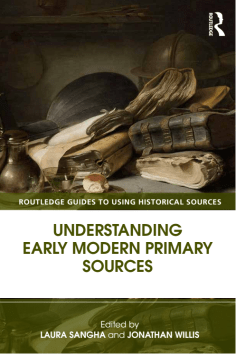
 to convince you that they have something to offer pretty much everybody interested in researching, reading or writing about early modern England. As well as co-editing
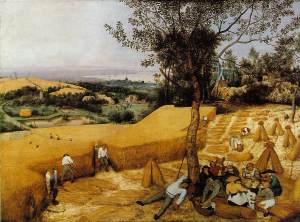

 The digested version is that comments tended to fall into three categories: those who were prompted to reflect on periodisation in relation to their own research; those who offered a transnational perspective; and those who added an interdisciplinary slant to the discussion. Whilst debates on this topic are a constant of historical research, social media has the benefit of creating a more diverse conversation which encourages broader perspectives and raises new complications. If the debate continues I intend to add to the story in due course, so please do join the conversation.
 the many-headed monster