
Mark Hailwood
This is the third and final post in a series introducing some key theoretical concepts through the history of food and drink (see here for the first, here for the second). The previous post concluded on Pierre Bourdieu’s point that the cultures of different social groups were relational to one another. But what was the nature of this relationship? It can be interpreted in a number of ways. Elias, for instance, as I mentioned in the previous post, tended to think that the cultural practices and preferences of the elites gradually ‘percolated’ down through the rest of society. Sometimes a similar argument is made with reference to the term ’emulation’ – the idea that lower social groups tend to ape the culture of higher social groups, and that this in turn causes those higher social groups to reinvent themselves to maintain their sense of distinctiveness and superiority.
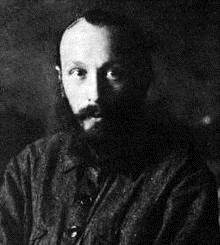
Bakhtin
A rather different way of looking at the relationship between the cultures of different social groups can be seen in our next concept that has proved popular with historians of food and drink – Mikhail Bakhtin’s notion of ‘carnival’. Bakhtin was a Russian literary critic, most famous for his book about the French Renaissance humanist Francois Rabelais, published in 1965 (although written under the Stalinist regime during WWII) Rabelais and His World. In the book, Bakhtin argued that Rabelais’ work provided a valuable insight into what he called the ‘folk culture’ of early modern Europe. If Elias’ conduct books could reveal the eating and drinking culture of European elites, what Bakhtin termed ‘official culture’, then Rabelais had written a carefully observed account of the consumption practices and dispositions prevalent amongst ordinary men and women. Continue reading



 the many-headed monster