The Conference Phenomenon

Laura Sangha

Ideally, my opening gambit on the many-headed monster would have been drawn from the research I have been doing over the summer. But as my first foray into blogging has coincided with conference season and the start of a new academic year, I have decided to offer a meditation on the former, though stay tuned for a series of posts on my summer ‘found art’ in the not too distant future.

As I entered the sixth hour of a train journey back from the European Reformation Research Group annual conference and the biannual Reformation Studies Colloquium in Durham last week, I found myself considering the phenomenon that is the academic conference. My relationship with ‘conferencing’ is probably similar to many others – sometimes they are a hassle, but they undoubtedly enrich my intellectual landscape and an early career academic certainly cannot afford to ignore them. Although expensive, time consuming, occasionally archaic, and sometimes disappointing, our discipline would be vastly impoverished without them – and in fairness, usually something can be salvaged from even the most disastrous event. And when they work well, they can really fly: assisting in the development of individual projects, establishing creative bonds between researchers, or providing the jumping off point for important proceedings and collections.
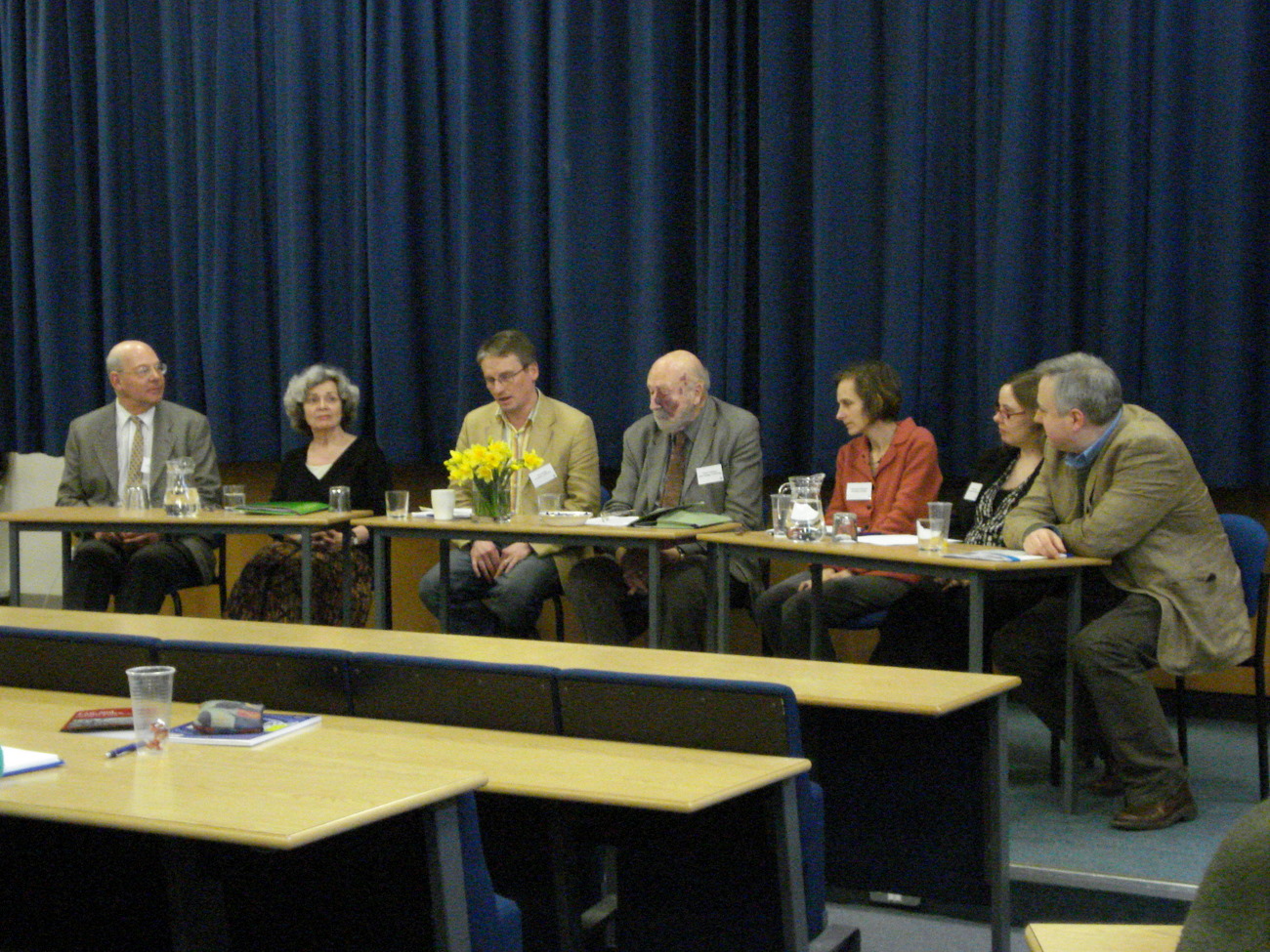
Plenty of ‘munros’ to be ‘bagged’ at this roundtable. L-R: Roger Bowers; Anne Dillon, Steve Hindle, Patrick Collinson, Alexandra Walsham, Tara Hamling, Brian Cummings.

The little name badge, the undrinkable tea and coffee, the gruelling programme, the bored looking chap on the book stall and the delegate snoring softly at the back of the room – these are all indispensable elements of the conference, but what is it that allows us to deem them a success? Here’s what I would hope for:

All the world’s a stage

The primary purpose of the conference is of course to showcase current research. The conference is the place to get my face and work known, as well as to find out about current trends in my research area, and to contact scholars working in similar areas. They are designed to encourage the exchange of ideas, and if you are lucky the responses, questions and comments on your paper will help you to develop your research in unexpected or unlooked for ways.

The Knowledge

The overall effect of a conference can be rather like attending thirty back to back mini-lectures, so it is inevitable that I learn a lot along the way. As my career has progressed, this aspect has become much more important – when I was a postgraduate I probably could follow about fifty percent of papers, but as my own knowledge has expanded I find that I am rarely completely lost these days.

Munro Bagging

A munro is a peak standing over 3,000ft (914m) above sea level, and you ‘bag’ a munro by climbing one. Some of my colleagues and I consider meeting and talking to eminent historians an academic equivalent to this, and we like to swap notes on how many renowned profs we have ‘bagged’ at the end of a conference. My broader point is, keynotes and plenary sessions give me the opportunity to see big name historians in action, as well as the chance to actually intellectually freestyle with them. Meeting your heroes can of course be a nerve wracking business (what if she’s a Tory? what if he’s got egg in his beard? etc), and I often find yourself trying to sneak a look at someone’s name badge so that I don’t find myself asking Professor Big-Wig what year of her PhD she is in. But sitting down to breakfast to find your entire bibliography sat at the table is (a) cool and (b) a wonderful opportunity to make an impression or pick someone’s brain.

Communitas

Linked to the previous section, this is undoubtedly the aspect of conferences that I most enjoy – the social side. Conferences are places to meet people, and to catch up with colleagues and friends (particularly at the bar in the evening, when many a morning session has been ruined). But from a professional point of view, the contacts I make and renew at a conference are an important part of my career development – just like at the early modern court, patronage and networks make academia tick. If you play your cards right you can identify seminar speakers, potential collaborators, external examiners, edited collection contributors or future colleagues. What’s more – we are all in it together. There is nothing like a two, three, or even four day conference to create an esprit de corps that will endure long after final talk is over.

So that’s what I think makes for a stimulating, intellectually (if not physically) invigorating meetings of minds. I’d be interested to know if people agree.
REED all about it – Part I: Fiddling at the Church Ale…

Jonathan Willis

This wasn’t originally going to be the first utterance of this particular newly-sprouted head of the many-headed monster, but Brodie’s recent musings ‘On the merits of dust‘ and the lively debate it sparked set me to thinking about one of my favourite short-cuts to a treasure-trove of brilliant archival material, the Records of Early English Drama series. REED (for short), for those of you who haven’t come across it, is an international project with its home at the University of Toronto. Since 1975 they have published almost thirty edited volumes bringing together collections of transcribed documentary material relating to drama, secular music, and community ceremonial and entertainments from the middle ages until the middle of the seventeenth century. Organised variously by city, county or region, these reassuringly sturdy big red books would be a handsome edition to any library or bookshelf (no, I’m not on commission), and even better many of them are also available to download in PDF format, perfectly legally(!), through the Internet Archive website. This is a top-notch published collection of manuscript material, gathered from record offices up and down the country, which is not only available in university libraries but also on your laptop, desktop or tablet. Continue reading

Workers’ Representation Part One: Spinning a Yarn

Mark Hailwood

As Christopher Thompson rightly notes over at Early Modern History, one of the great things about working at The Huntington is the people you get to meet over coffee. Last week I had the pleasure of meeting for the first time Patricia Fumerton, from the University of California Santa Barbara. Paddy is the pioneer of the online ballad database, EBBA, a digital resource that has been indispensable to my own research, and has been linked to on this blog numerous times already.

This gave me the chance to tell Paddy how great I think the site is, and in particular to praise its latest function that I have been playing around with: the ability to search, by category, the woodcut illustrations that adorn most seventeenth-century broadside ballads. I’ve been working on an article on representations of workers in these ballads – in particular artisan tradesmen – but my focus has been on how they were represented in the text of these ballads: how they were described and characterised. I hadn’t been paying too much attention to looking at the pictures – but might these too be a useful source for the kind of cultural history of work and workers that I am interested in? I entered a search for woodcuts that had been categorised as depicting ‘occupation / trade’, and spent some time perusing the 122 results that came up.

I’m not sure I have the skills or training to confidently deploy this kind of visual evidence in a formal historical paper or article, but I do find it fascinating, and thought I would offer up some of my thoughts in a series of blogposts entitled ‘Workers’ Representation’.

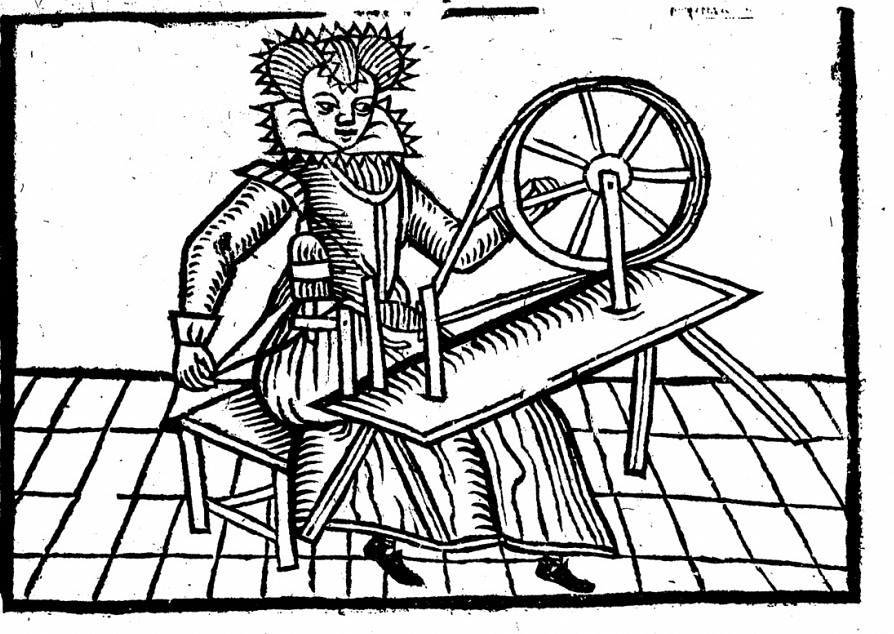
One of the first things that caught my eye was the common depiction of a key category of women’s work: spinning.

A woodcut taken from the ballad ‘Whipping Cheare’, from the Pepys collection, vol. I, no.208-109, c.1625. Source: EBBA

Continue reading

The monster sprouts two new heads

Brodie Waddell and Mark Hailwood

For the last couple of months we have been a very strange sort of ‘many-headed monster’: a creature with only two heads.

That is all well and good for muppets, but we – as pedants scholars – believe that ‘many’ ought to denote at least three and preferably four.

It is thus with great relief that we welcome two new authors to the blog: Laura Sangha and Jonathan Willis. Like us, they are both historians of early modern England and hold PhDs from Warwick.¹ But unlike us, they are also well-established in their fields, with lectureships at Exeter and Birmingham respectively. Their research has focused on cultural and social history, especially the Reformation and the changing nature of religious practices and beliefs in the sixteenth and seventeenth centuries. You can find out a bit more at our About Us page.

Footnotes

¹ Although we were all Warwickers, they had a different doctoral supervisor, so I suppose one might call them Marshallians rather than Hindleites.

Christopher Hill, class hatred and the many-headed monster

Brodie Waddell

In 1965, Christopher Hill published an essay entitled ‘The Many-Headed Monster’, from which this blog takes its name. The piece begins, of course, with a quote, but he then lays out much of the argument right on the first page:

Most writers about politics during the century before 1640 agreed that democracy was a bad thing … ‘The people’ were fickle, unstable, incapable of rational thought: the headless multitude, the many-headed monster.

According to Hill, the ‘class hostility’ of the propertied elite was deeply engrained in how they wrote and thought, so that ‘dread and hatred of the masses’ emerged in literature, philosophy and theatre.¹

It is difficult now to imagine that this was ever an important, novel argument. Today, historians of early modern England are well-aware of the distorting prejudices that shaped the way ‘the landed classes’ saw the actions of their supposed ‘inferiors’. We have, for a few decades at least, worked to read such sources ‘against the grain’ rather than to accept uncritically the words of the wealthy, educated men who provide so much of our source material.

‘Hydra’ from Edward Topsell’s The History of Four-Footed Beasts and Serpents (1658). Courtesy of Special Collections, University of Houston Libraries: UH Digital Library.

But in 1965 this was not the case. Certainly there were already many good historians who thought carefully about the biases inherent in their sources and I would be very surprised if Hill was the first to make this point about Tudor and Stuart elites, but the essay still served an important purpose. It surveyed the wide-reach of this paranoia amongst the ‘better sort’ of people, setting it out in clear and unambiguous detail. Indeed, one weakness of the essay is its repetition – one reads quote after quote from authors expressing their fear or hatred of the ‘lower orders’. How many times do we really need to hear seventeenth-century toffs denounce ‘the ruder sort’ as ‘a violent flood’ or ‘foolish flies’ or ‘untamed beasts’ or ‘vile caitiff wretches’?

Hill nonetheless performed a valuable service by implicitly critiquing those scholars who had ended up (perhaps unconsciously) adopting the distorted perspective of their sources. One of the more well-known examples is Max Beloff, whose discussion of later Stuart food riots clearly owed much to the harsh descriptions of the unrest recorded in the state papers. Although it was only in 1971 that E.P. Thompson made Beloff notorious by criticising him directly, Hill’s essay showed the dangers of failing to account for the ‘class hatred’ of the English gentleman.²

Beyond this methodological point, Hill went on to show how these stereotypes influenced the course of the ‘Great Rebellion’ of the 1640s. Fear of the ‘giddy multitude’, he argued, actually shaped historical events. But perhaps this is a topic for another time.

For now, I’ll just close with a question: Do our own biases (as educated, middle class professionals) mean that we continue to often unconsciously imbue those of our well-off predecessors? Or maybe has nearly half a century of ‘reading against the grain’ left us less able to understand the genuine anxiety of a seventeenth-century gentleman faced with a crowd of ‘base and disorderly people’?

Footnotes

¹ Unless otherwise noted, all quotations are taken from Christopher Hill, ‘The Many-Headed Monster’, in his Change and Continuity in Seventeenth-Century England (1975), pp. 181-204. It was first published in C.H. Carter (ed.), From the Renaissance to the Counter-Reformation: Essays in Honour of Garrett Mattingley (1965).

² E.P. Thompson, ‘The Moral Economy of the English Crowd in the Eighteenth Century’, Past and Present, 50 (1971), p. 76, citing Max Beloff, Public Order and Popular Disturbances, 1660-1714 (1938), p. 75.

On the merits of dust

Brodie Waddell

Mark’s recent post – and the related questions that come up at EMOB, Tim Hitchcock’s blog, and elsewhere – got me thinking a bit more ‘about the relative merits of (cheap, easy and efficient) access to digitised primary sources on one hand, and to (often expensive, labour intensive and time-consuming) hands-on access to original materials on the other’.

This is something that I’m conflicted about too. On the one hand, I have an emotional and aesthetic preference for the dusty originals. On the other, I often find at least as much useful material in the clean, searchable digitised sources.

At a practical level, I’m inclined to throw in my lot with the digitisers. Wonderful resources like EBBO, ECCO, TCP, EBBA, BHO, OBO and LL opened up new worlds to me (especially when I was a student in Canada) and to many other scholars. Without them, much of my work would be impossible or, at the very least, about ten times slower.

An information related to the theft of two pewter pots, from the Middlesex Sessions Papers, dated March 1760, digitised at London Lives.

Nonetheless, I believe that there is another consideration that is rarely mentioned in discussions like these: there is an undeniable tendency for digitisation to reinforce existing biases in source use. Before digitisation began, people tended to use printed works more than manuscripts and to use southern English (especially metropolitan) archives more than distant archives. This makes perfect sense: if you are based at Oxford or Cambridge or flying into London from North America, why wouldn’t you focus on the sources accessible there. Digitisation has made this bias even stronger. Print has been digitised before mss and southern/metropolitan archives have digitised more than less central ones. (See, e.g., the sites mentioned above and also TNA and the ERO.)

What this means is that one often finds historians extrapolating from the same types of evidence, with the same innate biases, rather than drawing on anything even approximating a ‘random sample’. Indeed, I often find myself doing this, so I don’t blame anyone else for doing the same.

In contrast, I’ve been privileged to have had the opportunity (i.e. time, funding) over the last few years to be able to regularly trek to a range of different county record offices and to simply dive into their material for a particular period to see what I find.  As a result, I feel like I’ve gained a genuinely stronger sense of what was going on than I would have had I been constrained by the limits of digitised material as it exists now or even as it continues to expand in the near future. I can see now that some previous historians may have mischaracterised events and periods purely because they were unable to explore a range of local material.

Obviously this isn’t something everyone, or even most historians, is able to do, so I unhesitatingly endorse all the good work that is going into digitising ever-more material and making it accessible to a much wider audience of researchers. Still, we must guard against the temptation to think that the great masses of sources that have been digitised somehow represent a more balanced source base merely because they are now so numerous. Biases remain and they may even be growing stronger.

PS: As Gavin Robinson is showing with his series blogging a soldier’s letters from the English Civil War, even when a manuscript source has previously been transcribed and printed (and will be eventually digitised), it’s often worth revisiting the original. Earlier editors sometimes made hilarious errors or took liberties with the text that can completely change the meaning.

The people love us

Brodie Waddell and Mark Hailwood

At some point around midnight on Saturday, September 1st, the many-headed monster received its thousandth hit. This calls for a celebratory cheesy animated gif…

Not bad for only a month and a half of blogging. Thanks to our readers for taking an interest in our thoughts an d little discoveries. And keep the comments coming. This place works best when you share your own interpretations and experiences alongside ours.

Also, on a more technical matter, we have now split up the ‘manyheadedmonster’ user into its component parts (manyheadedhailwoodbrodiewaddell), so it will now be possible to click on the author’s name at the top of each new post and see all of their other posts, except for those published before today.

UPDATE (03/09/12): Apparently the people love us even more than we could have hoped, because yesterday we jumped from around 1,000 total views to over 1,250. Thanks to Loretta Chase and Isabella Bradford for linking to us.

Update (14/09/12): Today we hit 2,000. When we make it 10K, we’ll have to break out the bubbly.

Huntington Library Treasures

Mark Hailwood

Days before I boarded a plane to Los Angeles to spend my summer as a research fellow here at the Huntington Library, I came across this article in the Times Higher Education supplement. Needless to say, the following quote only added to my sense of anticipation: ‘One of my friends said that if she died and went to Heaven, she would expect St Peter to ask for her Huntington reader’s card at the pearly gates.’ Six weeks later, and I can see where she was coming from.

But there was something else from that article that I carried with me across the Atlantic – a question mark about the relative merits of (cheap, easy and efficient) access to digitised primary sources on one hand, and to (often expensive, labour intensive and time-consuming) hands-on access to original materials on the other. The article echoed a sentiment I have often heard expressed at an academic conference or seminar series: historical research may be a lot easier today due to advances in digital technology, but as a result something valuable has undoubtedly been lost. But what?

Too often, the arguments deployed here reach for an intangible, almost mystical quality to doing good old-fashioned grubbing in dusty archives. That handling original sources is somehow more righteous; it allows us to ‘get a better feel’ for our sources; in some way by touching centuries old parchment we can almost touch the past itself. I often find myself thinking in these ways after a day in the archives, but as a historian who is trained to judge arguments in a detached and ‘rational’ manner, I have to admit that they don’t add up to a very concrete or convincing case. As a historian that has done a reasonable amount of work on both digitised print material, and on fusty manuscript legal records, I can’t honestly put my finger on a tangible difference in the quality of research I produce from each. Even if exploring one does contain a greater sense of adventure than the other.

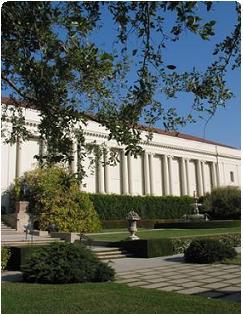
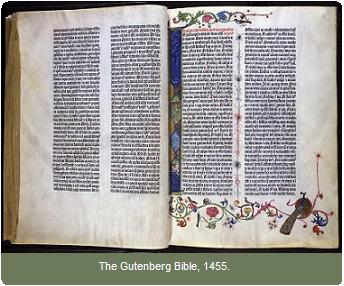
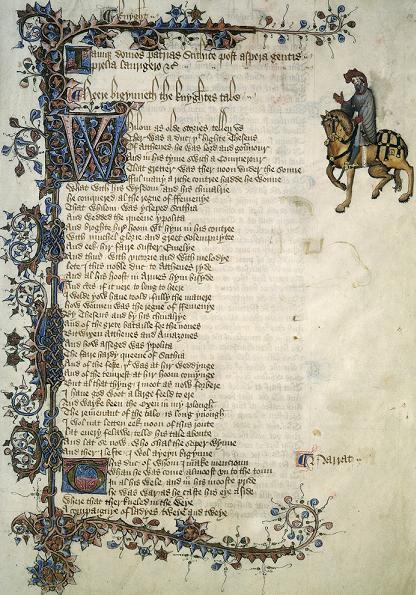
It was with this jumble of thoughts on my mind that I bunked off from the library for a few hours to take a look at a new exhibition of ‘Huntington Treasures’. It’s hard to imagine a more star-studded collection of early modern books together in one place: an original Gutenberg Bible, which was the first major book produced on a printing press anywhere in the world; the Ellesmere Chaucer, one of the earliest collections of the Canterbury Tales produced around the turn of the 15th century; a first folio edition of Shakespeare’s collected plays from 1623; first editions of works by Hobbes, Locke, Ben Jonson… I could go on. I was, of course, appropriately impressed

There was something exhilarating about seeing original editions of these landmark texts, but I wasn’t prepared to let that steamroller my lingering uncertainty about the innate superiority of consulting originals over reproductions. What as a historian had I really gained from seeing these texts up close and personal? I wasn’t convinced that it brought me any closer to how contemporaries would have connected with these works: venerated in an exhibition hall, in a glass case, as a ‘treasure’ rather than as reading material. There were aspects of the ‘materiality’ of these books that could provide more tangible insights for the historian to take away: the sheer size of a Gutenberg or King James bible meant that reading it would have required some supporting apparatus, whereas a single sheet broadside ballad could be read on the move or in any position (think hefty hard-back versus kindle, perhaps). The act of reading one or the other would have been very physically different, and would have therefore been experienced, approached and understood as a distinct type of reading activity. Sure, but I didn’t really need to travel 5000 miles to see the originals to figure that out.

I am, admittedly, trying to be provocative here. I wouldn’t disagree that there is value in consulting original materials rather than relying exclusively on digital reproductions. That said, I do think that historians should be asking themselves to come up with far more rigorous explanations as to why that’s true.

Norwich Entertainments – Part III: A medieval royal mistress in the 17th century and beyond

Brodie Waddell

In December 1677, the Norwich Mayor’s Court granted Elizabeth Soane a licence ‘to make shew of a Motion Called Fayre Rosamond until further order’.¹ Now here, finally, we have a clear reference to a well-known story. This play or ‘Motion’ must have recounted the life and death of one of England’s most famous royal mistresses, a surprisingly crowded field.

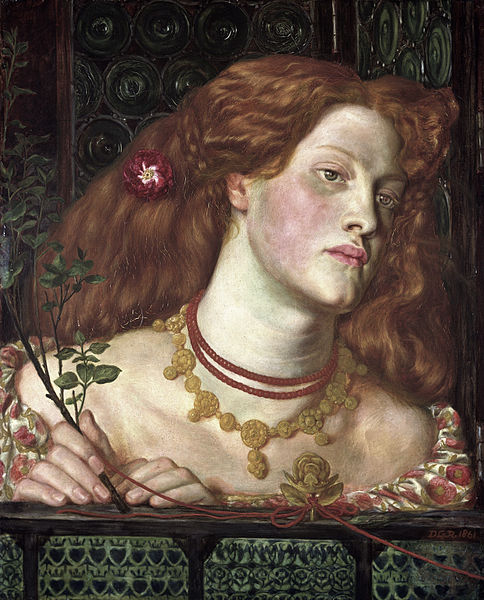
Dante Gabriel Rossetti, ‘Fair Rosamund’ (1861), modelled by Fanny Cornforth (source: National Museum Cardiff via Wikimedia Commons)

‘Fair Rosamund’ was a woman named Rosamund Clifford (d. 1176?), a mistress to Henry II and subject of innumerable legends. Various tales claimed that that the king built a palace and labyrinth at Woodstock for her, that she was mother to an Archbishop of York and the Earl of Salisbury, and that she was poisoned by the queen, Eleanor of Aquitaine. Sadly, none of these seem to be true.² Continue reading

It was a dark and stormy night…

Brodie Waddell

Beginnings are tricky. Coming up with an opening sentence for a great big pile of paper is never easy, especially if it’s the first great big pile of paper you’ve written. When you’ve invested at least several years of your life in a project, it can be very difficult to find some way to introduce it to your reader.

It’s customary to start with a quotation or short vignette. One of the most famous of these is Foucault’s introduction to Discipline and Punish:

On 1 March 1757 Damiens the regicide was condemned “to make the amende honorable before the main door of the Church of Paris”, where he was to be “taken and conveyed in a cart, wearing nothing but a shirt, holding a torch of burning wax weighing two pounds”; then, “in the said cart, to the Place de Grève, where, on a scaffold that will be erected there, the flesh will be torn from his breasts, arms, thighs and claves with red-hot pincers, his right hand, holding the knife with which he committed the said parricide, burnt with sulphur, and, on those places where the flesh will be torn away, poured molten lead, boiling oil, burning resin, wax and sulphur melted together and then his body drawn and quartered by four horses and his limbs and body consumed by fire, reduced to ashes and his ashes thrown to the winds” …

This leads Foucault into a minutely description of the gory process which then shifts abruptly to the highly-regimented daily schedule laid down for ‘for the House of young prisoners in Paris’ in the early nineteenth century. These examples, he says, epitomise ‘a time when, in Europe and in the United States, the entire economy of punishment was redistributed … It was a new age for penal justice’. Although I disagree with much of Faucault’s argument here, as an introduction this is a brilliant example of the form.

Despite a strong temptation to buck this tradition, I started my PhD thesis with a quote from John Bunyan, the peripatetic Baptist preacher and allegorist. Although I stuck with that for the book, the first few paragraphs needed a lot of work. I’ll let you judge for yourself whether the result was successful. The point is: beginnings are tricky.

So, it was with great interest that I read a post by Dave Hitchcock (yet another Hindlite, or should it be ‘Hindleite’?) on the opening for his own PhD.

We begin with a stone. … Yes, with a stone. With a stone flying through the air, in the late 1690s, and hitting the head, the confident, ‘middling sort’, noggin of Thomas Smith, who at that present moment, was atop his horse, riding blithely down a road in Warwickshire, England. I think he was close to Warwick town, the county capital. But as I say, our friend Thomas was struck on the head by a stone, while atop his horse, a powerful symbol of his social status might I add, in the late 1690s.

Not bad at all. He goes on to introduce us to an ‘un-named, possibly scottish, vagrant woman who might have had an incredible fastball and a grudge against authority’. She alone is reason enough for me to want to read the thesis.

Is this tendency to open with a story confined mostly to historians and other humanists? Or is this something that social scientists do too?