This post is part of the Monster Carnival 2022 – Why Early Modern History Matters Now. Dr Kirsteen M MacKenzie is an academic historian and broadcaster who is passionate about early modern British, Irish, and French history. Her areas of interest are the Wars of the Three Kingdoms 1637-1660 and the Jacobites. Dr MacKenzie received a PhD in history from the University of Aberdeen in 2008. Her first monograph The Solemn League and Covenant of the Three Kingdoms and the Cromwellian Union 1643-1663 was published by Routledge in 2017. You can follow her on Twitter @kirsteenmm.
Kirsteen M MacKenzie
The relationships between Westminster and the devolved nations are at their lowest ebb for decades, with ongoing tensions between the centre and the periphery. These issues are not unfamiliar to those historians who study the three Stuart kingdoms between 1603 and 1707. The monarch’s ability to manage three very different kingdoms or four nations with different histories, laws, languages, and religious institutions, was key to the peace and stability of Britain and Ireland. During that century various efforts were made to try and find a union that worked for every nation. It could be said that Stuart Britain helps us understand the current parliamentary union and perhaps offers solutions to our constitutional impasse.
The Cromwellian Foundations of British Parliamentary Representation
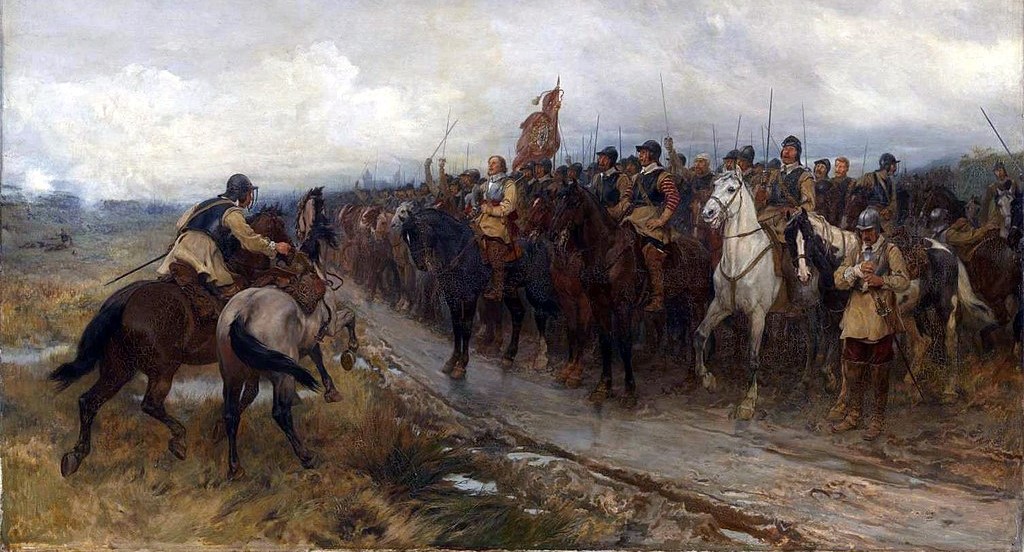
In July 1650 Oliver Cromwell marched towards Scotland with an army, declaring his love for the Scots as neighbours and friends. Cromwell and his army regarded themselves as the liberators of an oppressed nation, bringing religious liberty, enlightened political ideals, and English Common law. This reflected the sense of English superiority that was felt during the English Republic. In essence, Cromwell and his men had headed north to conquer Scotland and incorporate it into the English Republic. Scottish contemporaries rightly feared the loss of Scottish identity and sovereignty. The Cromwellian Incorporative Union was the first to abolish the Scottish Parliament and offer the Scots parliamentary representation at Westminster. This was not an act of benevolence. It was a forceful act where acceptance of the union was mandatory. This was not a British Parliament, it was an English Parliament forcefully incorporating Scottish members into English political structures.
The Act Union of 1707 created a British political union and unlike the Cromwellian Union it protected the independence of Scots Law and the Scottish church after a period of negotiation and consent. However, similar to the union in the 1650s, the Scottish Parliament was abolished and Scottish members were incorporated into English Parliamentary structures, which became the British Parliament. Therefore the weight and distribution of British parliamentary representation in Westminster can trace its origins to the Incorporative Cromwellian Union of the 1650s rather than the Act of Union of 1707.
Under these arrangements English votes outweigh those from the other parts of the United Kingdom and is a major cause of the current constitutional tension between England and Scotland within the United Kingdom.
Continue reading