On periodisation: unanswerable questions, questionable answers

Links to the other posts in the ‘On Periodisation’ series:

Laura Sangha

The many-headed monster’s mini-series ‘On Periodisation’ really struck a chord with our readers, prompting an outpouring of comments both below the line and on twitter. I have captured many of these in this Storify – thanks so much to everyone who took the time to offer their thoughts, and my apologies to anyone whose comments I missed, but it was hard to keep up!
Picture2The digested version is that comments tended to fall into three categories: those who were prompted to reflect on periodisation in relation to their own research; those who offered a transnational perspective; and those who added an interdisciplinary slant to the discussion. Whilst debates on this topic are a constant of historical research, social media has the benefit of creating a more diverse conversation which encourages broader perspectives and raises new complications. If the debate continues I intend to add to the story in due course, so please do join the conversation.

My original intention was to try to summarise these contributions in another post, but when it came to it I struggled because the responses were both (a) too various, and (b) too contingent. Thus this post instead focuses on the shared responses to periodisation, in the form of a series of questions people ask about it. Continue reading
On periodisation: two ‘early modern’ Englands?

Links to the other posts in the ‘On Periodisation’ series:

Brodie Waddell

Last week I had the privilege of attending Laura Gowing’s inaugural lecture on ‘A Trade of One’s Own’. She told the fascinating story of women’s changing relationship with London and its livery companies over the course of the seventeenth century.

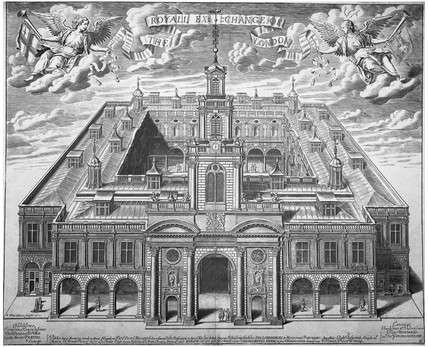
It was a brilliant lecture in all sorts of ways, but what caught my ear was the way she implicitly divided her story into two periods. From my recollection, there were relatively few formal changes in the way the companies dealt with women over the course of the sixteenth, seventeenth and eighteenth centuries – yet Gowing showed that unofficial norms shifted substantially. Specifically, she showed that the number of women as mistresses and apprentices rose from the 1640s onwards and resulted in a new landscape in which – for example – about 40 percent of the shops in the Royal Exchange were owned by women by the end of the century.

The Royal Exchange, 1671

The Royal Exchange, 1671

Although Gowing did not discuss the reasons for this shift in detail, she alluded to the disruptions of the Civil Wars, the rise of new women-made fashions such as the mantua gown, and the increasing preponderance of women among migrants to the metropolis. In fact, pinning down a specific cause may be impossible because the change seems to have been almost ‘over-determined’. In the middle decades of the seventeenth century, everything seemed to be changing.

Dividing ‘early modernity’

This lecture set me thinking about my own sense of periodisation. Laura has talked about start and end points for the ‘early modern’, Mark has discussed the question of ‘modernity’ itself, and Jonathan has addressed the thorny notion of a ‘Reformation era’. But what about the divisions within the ‘early modern period’, however defined?

It seems to me that there has increasingly emerged a sense of an ‘early early modern period’ and a ‘late early modern period’. I’ll call them the EEMP and LEMP, because acronyms add an air of authority. Continue reading

On periodisation: religion, early modernity, and ‘The Reformation’

Links to other posts in the ‘On Periodisation’ series:

Jonathan Willis

In some ways, ‘The Reformation’ (I’ll explain the excessive punctuation in a bit) may seem like an odd contribution to a blog mini-series on periodisation.  After all, surely ‘The Reformation’ was a thing, an event, something that happened, rather than a neutral description of a period of time (although, as we are coming to discover, there is rarely anything neutral about how anybody, let alone a historian, parcels up the past).  As Laura mentioned in her introductory post, use of ‘The Reformation’ to describe a period of time tends to have most currency in North America, where ‘Ren-Ref’ is a convenient shorthand for the periods of the renaissance and reformation, c.1400-c.1600, or c.1350-c.1650, or c.1300-c.1700; well you get the idea…  I am a product of the UK Higher Education system, however, having never studied or worked in the US or Canada, and so I’m going to leave ‘Ren-Ref’ to one side for now.  Instead, there are two related questions I want to address in this post.  Firstly, how useful is religion in helping us to define the early modern period?  And secondly, how should we define the chronology of ‘The Reformation’ itself?

Religion and Early Modernity

wooden_hourglass_3

A less contentious way of measuring time?

To what extent can we define early modernity with reference to developments in the religious sphere?  For the sake of argument, and because one post can’t do everything, I’m going to work within the eurocentrism of the term early modern, and accept for now its customary definition as c.1500-c.1700.  In some ways, there is a fairly good case for arguing that the early modern period saw within it some fairly distinctive developments in matters of religion, and that therefore these developments do help give a sense of coherence (or at least, of coherent incoherence) to the period as a whole.  To start with the most obvious, we might characterise the early modern period as one which witnessed at its outset the collapse of 1500 years of broad religious unity: provocatively, one recent overview of early modern history has taken as its title Christendom Destroyed.[1]  The Protestant Reformation, and the growth in number of religious sects and denominations that broke away from the previously hegemonic monolith of the (Roman) Catholic Church, and subsequently from one another, could plausibly be seen as the defining characteristic of the early modern age. Continue reading

On periodisation: a defence of ‘early modern’

Links to the other posts in the ‘On periodisation’ series:

Mark Hailwood

As Laura outlined in the previous post of this ‘monster series on periodisation, the term ‘early modern’ has – since the 1970s, at least in the history departments of UK universities  – come to be seen as one of the ‘holy trinity’ of historical periods: the medieval, the early modern, the modern. But why?

There a number of reasons why its widespread acceptance and use could be considered somewhat surprising. Its current prevalence in publication and job titles – and on this blog, which self-identifies as an ‘early modern history’ blog – is remarkable given that it is a relative newcomer to the periodisation party. And as Laura has already highlighted, there is little agreement on when exactly it was (1500-1700 is, of course, the right answer…)[1]

But to me the main reason why its rise to near canonical status seems a little odd is because of what it implies: that the sixteenth and seventeenth centuries are best understood as being on their way to somewhere else, or as a sub-period of modernity, rather than being a distinct historical period in their own right. But these kinds of ‘modernisation narratives’ – viewing the past as if the only story is the triumphant and inevitable march of all things towards the shiny here and now (more pessimistic forms of historical determinism are, of course, available) – were heavily criticised and fell into decline among historians at more-or-less the same time that the term ‘early modern’, with all its ‘modernisation narrative’ implications, was enjoying its assent.[2] Very odd.

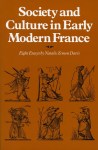
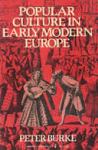
pid_2559indexIndeed, since the 1970s one of the most significant developments in historical approaches to the sixteenth and seventeenth centuries has been a desire to excavate the beliefs, culture and actions of contemporaries and to understand them ‘on their own terms’ – in the process often emphasising just how different and distinct, rather than similar and vaguely modern, the period was. Is ‘early modern’ really the best term for capturing this singularity? Perhaps not, but the term was and is widely deployed by cultural historians nonetheless. In fact, Keith Thomas, Natalie Zemon Davis and Peter Burke can all be counted among the pioneers of both cultural history and the term ‘early modern’. Continue reading

On periodisation: or, what’s the best way to chop history into bits?

Laura Sangha

This is the first post in our new Monster Mini-Series on periodisation. Click here for the Series introduction.

There are many different ways to divide the past up into analytical chunks, but some ways are more popular than others. In this post I offer a brief overview of some of the most common periodisations. It is of course a broad brush summary with a tendency to generalisation. Please do flesh it out with your own comments and refinements below the line – we have had a great response to the series on twitter and I will be collating many of these contributions for a later blog.

Binaries: modern / pre-modern

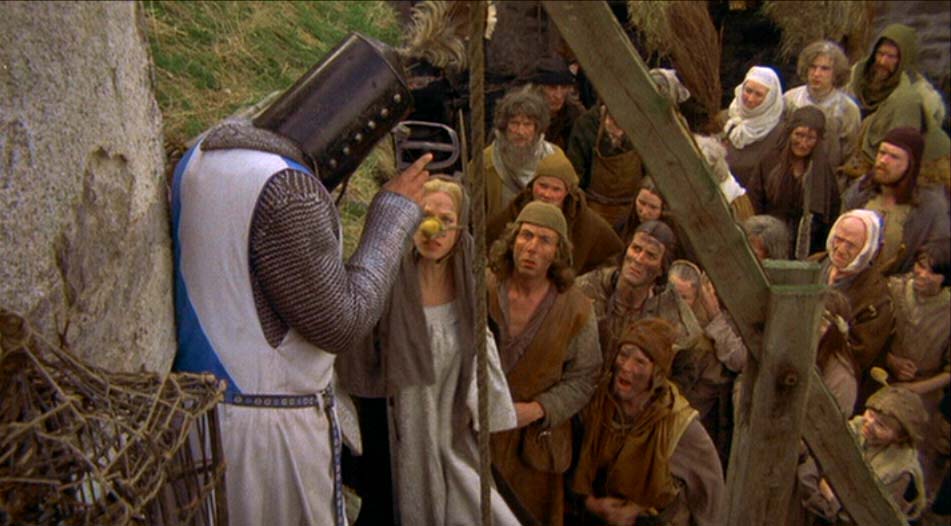
Starting with the simplest division: if you are short of time, the strongest chronological distinction often appears to be between the modern age, and all the stuff that happened before it. You know, when everyone was blindly superstitious, 99% percent of the population spent their lives covered in sheep poo, there was no electricity, no penicillin, no roads and subsequently a bunch of kings ordered everyone about whilst riding over-mighty dragons. Or something. Sometimes undergraduate ‘survey’ modules are organised along these chronological lines: at Exeter the ‘pre-modern’ module covers c. 500-1750; the ‘modern’ module covers 1750-present.

grail07

Pre-modernity: knights, witches, muddy peasants and that sort of thing.

Of course this rather oversimplifies things. Europe in 700 didn’t look or feel anything like Europe in 1700. The divide also massively prioritises the last 200 or so years of history and diminishes the previous 1,300. It is a useful shorthand for showing potential undergraduates the breadth of your teaching programme or identifying yourself at a multi-disciplinary event, but not much more.

The holy trinity: medieval / early modern / modern

In Europe and North America, history is often chopped into three: the medieval (c. 500-1500), the early modern (er… let’s say c. 1500-1800) and the modern (c. 1800 – present). Continue reading

On periodisation: an introduction

Laura Sangha

This is the introductory post to our new occasional Monster Mini-Series on periodisation in history. In a series of related blogs we will be exploring historical chronologies, examining the ways in which we chop up the past into more digestible chunks. We are interested both in how we do this, but also why, and what the consequences are for both how we conceive of the past, and how this in turns effects the organisation and practice of the discipline. The other posts are:

Posts that also engage with the theme:

IMG_0204

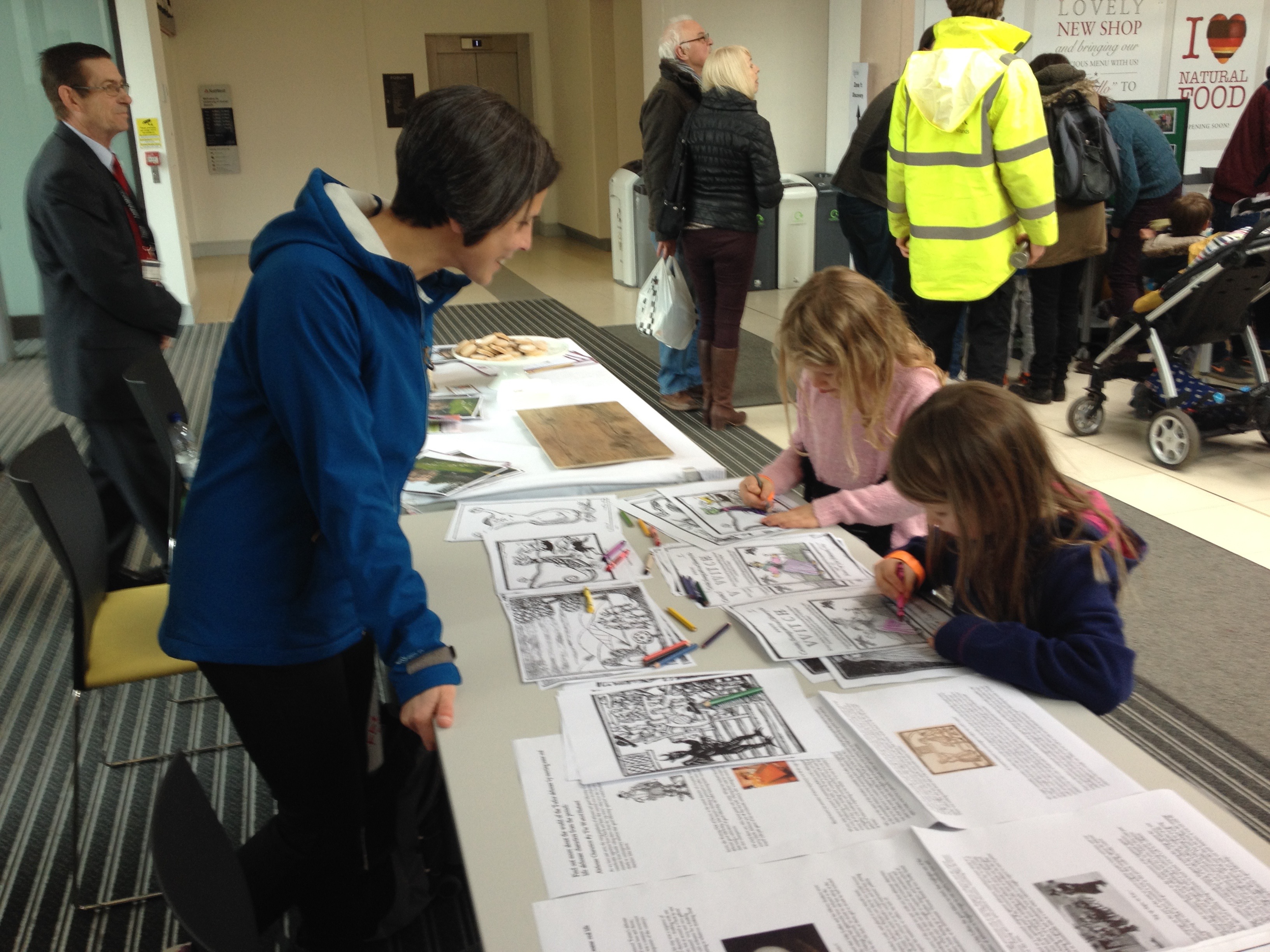
The University of Exeter’s community day: What does early modern mean, and who is this strange horned and hoofed man?

I quite often find myself needing to explain what period of history I work on, and it isn’t always straightforward. For example, my students are often not familiar with the term ‘early modern’ and remain convinced that anything that isn’t modern is ‘medieval’. At the University of Exeter’s recent Community Day, one of the most popular questions from visitors to the ‘Centre for Early Modern Studies’ stand was: what dates / centuries / years does that refer to? (In case you are interested, the other top question was: ‘what’s the devil’ from children colouring in woodcuts of said infernal being).

This is an issue that has a bearing on the many-headed monster too. We self-identify as an early modern blog, and the Monster’s tagline is that we offer “‘the history of ‘the unruly sort of clowns’ and other early modern peculiarities”. Whilst fellow academics might have a grasp of what that means, the blog aspires to reach an audience beyond professional historians, to whom the term may appear rather opaque.

The answer to what ‘early modern’ means is, of course, 1480-1700. Or perhaps 1500-1750. Or maybe 1450-1800. Actually it really depends. Oh, and if you are outside of Europe and North America you might not recognise the term at all, being equipped with a completely different way to think about your national past. Continue reading

Job listings for historians on jobs.ac.uk, 2013-16

Brodie Waddell

Every year, universities across Britain and beyond place hundreds of advertisements on jobs.ac.uk seeking to appoint historians to academic posts. Although accessing this data is not easy and analysing is far from straightforward, recent listings do provide some potentially useful information about the state of the academic job market for historians.

In my previous posts on jobs, I have focused primarily on the ‘supply side’ of the equation – how many people are completing PhDs each year and how that is changing. It is much more difficult to get hard data on the ‘demand side’ – i.e. jobs available – though I’ve tried various proxies such as the numbers of historians with university posts or the number of incoming history undergraduates. The cohort studies of Warwick and Cambridge PhDs allowed me to link doctorates to academic posts more directly, but that was only a small and probably unrepresentative sample.

New data and methodology

The advertisements on jobs.ac.uk allow us to get a better sense of how many jobs are actually listed in a given year. Continue reading

History doctorates and the academic job market: 99 Warwick PhDs, 2001-2013

Brodie Waddell

My analysis of official public data suggests that the number of PhDs in history in the UK is growing significantly almost every year, whereas the number of undergraduates and university-based historians is expanding only very slowly. However, these figures are only really useful for providing a sense of changes in the relative balance between undergrads, teachers and PhDs over time. They do not provide any concrete sense of the likely destinations of successful doctoral candidates.

In September, Rachel Stone, a medievalist at KCL, put together a very useful ‘cohort study’ of the 66 people who had completed PhDs in history at Cambridge in 2005. Her headline result was that 36 of them (55%) seemed to have academic posts a decade later. She also found that modernists and men were more likely to have academic jobs than medievalists and women, though she noted that it is difficult to know which factor is the most influential as women were more likely to be medievalists. Katrina Gulliver did a similar analysis of those granted Cambridge history PhDs in 2007-8 and found that ‘fewer than 50% have a permanent academic job’ after seven years.

I did my PhD at Warwick (completed 2009, awarded 2010), so I thought it might be useful to look at some cohorts there as a comparison. However, as the Warwick History Department is much smaller than Cambridge’s History Faculty, I decided to look at a longer period, namely 2001 to 2013. Continue reading

Students, PhDs, historians and jobs, 1994-95 to 2014-15

Brodie Waddell

In September, I posted some data on the state of the field in academic history. It wasn’t an especially rosy picture, but I followed that by trying to gather some suggestions on what could be done to improve the situation and also offered my own thoughts.

My initial post was provoked by my annoyance at how little historical data seemed to be easily available for the history profession, so I pulled figures from HESA and a variety of other sources to try to piece together a picture. A few weeks ago, the American Historical Association updated their job market statistics for US historians and HESA released their UK data for 2014-15, so it seemed only right to update my figures.

Let’s start with the American data as it is much more precisely focused on the academic job market than the UK numbers. Continue reading

Green Paper Blues: A Shiny New Bureaucracy for University Teaching

Earlier this month the UK government published its Higher Education Green Paper which sets out its plans for universities. Here John Arnold, Professor of Medieval History at Birkbeck and friend of the Monster, offers his reaction to the new policies and their justifications. This will not be of interest to everyone, but all UK academics and those of you thinking about doctoral studies, who may have read our earlier posts on the state of the field, need to be aware of what is going on. For the uninitiated, ‘TEF’ is Teaching Excellence Framework, ‘REF’ is Research Excellence Framework, and ‘HEFCE’ is the Higher Education Funding Council for England.

Gosh, isn’t it exciting finally to see the Government’s Green Paper? Turns out some rumours were true – there will be a TEF, say bye-bye to HEFCE – and others not so much (REF will live on). There’s quite a lot of it to wade through, but – regarding TEF in particular – as one colleague said in a management meeting earlier this week, ‘it’s not actually as bad as all that’.

And of course that’s right. Who could object to ‘putting students at the heart of the system’, and who would not want us to value teaching as well as research? The starting point for TEF is a mild adjustment to something we already do, i.e. institutional audit for quality. So – nothing to worry about here, and perhaps some things to celebrate? Continue reading