Guest Blog by Amanda Herbert Continue reading
Marooned on an Island Monographs: a History of Femininities Reading List
6

Guest Blog by Amanda Herbert Continue reading
Brodie Waddell
 I’m very grateful to all of you who’ve already offered your thoughts on how we can improve the history profession. I agree with most of the comments on my previous posts on academic employment and practical responses – in fact some of the suggestions below are borrowed from those comments. However, I promised that I would offer my own tuppence so here I’ll try to set out some steps that we can take individually or collectively. Most of these are quite minor, but hopefully they are a good start. They aren’t in order of priority, but the first four are generally about gathering and publishing information and the rest are about more direct action. Continue reading
Brodie Waddell
The study of history in Britain is not in crisis. The numbers set out in my post last week show that the last few decades have been a period of massive expansion for the field. There are more people ‘doing history’ at all levels of higher education, from new undergraduates to doctoral students and teaching staff. What’s more, I’d argue that public interest in history has been growing as well, a point brought home to me by the extraordinary response to the ‘History from Below’ and ‘Voices of the People’ online workshops that we’ve hosted.
It would, however, be irresponsible for historians like myself – who enjoy secure academic positions – to overlook the very real problems that confront the history profession today. In my recent posts I’ve highlighted two specific issues: the rapid growth in the number of doctoral students who are unlikely to obtain a permanent university post and, relatedly, the substantial number of early career historians trapped in precarious ‘casual’ employment. One might also add the under-representation of women in the academic upper ranks, the collapse in part-time studies, and the rising debt burden imposed on our students, among other things.
My previous posts provoked a flurry of valuable responses including one from Peter Mandler and another from Adam Smith, respectively President and Honorary Secretary of the Royal Historical Society. I’m very grateful to both of them for their feedback, which not only augmented and corrected some of my own conclusions, but also invited me to think about what practical measures the RHS (or other bodies such as the IHR) could take in the future. What sort of data should they be collecting and how? What kind of advice or information should they be providing? Is there anything else they can be doing to help to counter-act these problems?
 This presents an obvious chance for me to pretend to know everything there is to know about the historical profession in Britain and make some sagacious pronouncements about ‘what is to be done’. However, in the interests of continuing the conversation, rather than closing it off, I’m going to restrain myself, at least momentarily. Instead, I’d like you, whatever your position or career stage, to offer your thoughts in the comments below (or on twitter, tagging me, which I’ll post here). I will add my own ideas in the comments in the next day or so, some of which I hinted at in the conclusions of the previous post. But in the meantime, let’s find out what the rest of the historical community thinks.
Brodie Waddell
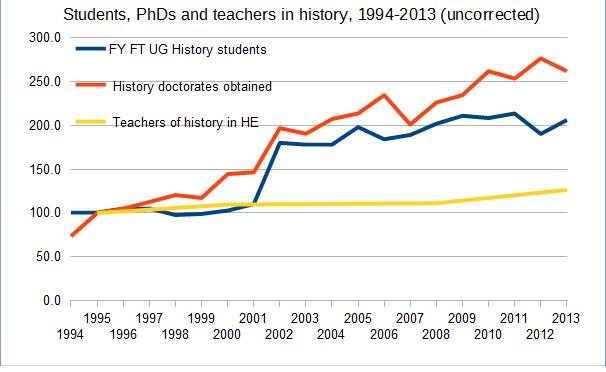
Over the last two decades, the number of new PhDs in history has grown much faster than the number of new undergraduate students or the number of academic staff in the UK. That’s my main finding from far-too-many hours spent rooting through old spreadsheets.
Last week, I published a post with some rough and very rudimentary analysis of the number of PhDs compared to the number of undergrads in ‘historyish’ fields. My conclusion was that the ‘supply’ of PhDs was rising faster than the ‘demand’. Since then, thanks to feedback from a wide range of commenters on the blog and on twitter, and thanks especially to Rachel Stone for alerting me to some additional data from the Institute for Historical Research, I’ve been able to refine and extend my conclusions. Although the depressing headline is roughly the same, I thought it would be helpful to set out what I’ve found.
The picture since 1995
The most solid and consistent figures begin in 1995/96, when we have numbers for first-year full-time undergraduates studying history (6,123), doctorates obtained in history (239), and teachers of history in higher education (2,665). We then have figures right through to 2013/14, when there were 12,615 of the same undergrads, 625 PhDs, and 3,366 teachers. When we index all these numbers to 100 in 1995/96, this suggests the number of undergrads has risen by 106%, PhDs by 162%, and teachers by only 26%.
Brodie Waddell
[UPDATE 08/09/15: Please read the updated and expanded version of this post here.]
On August 24th, Matthew Lyons published a piece in History Today on ‘the plight of early career researchers’. Reading the comments there, on twitter and on other blogs, it is clear that he hit a raw nerve.
As commentators pointed out, some of his assertions were unfounded (e.g. ‘many if not most academics disdain teaching’, ‘[ECRs] are offered no career development or pastoral support’). Nonetheless, his claim that newly-minted historians tend to struggle rings true. Between us, the four heads of the many-headed monster have had plenty of experience with job insecurity, poorly-paid positions, forced transience, bad working conditions and other early career problems.
However, a post from William Whyte – a historian of universities – made a very good point: there is nothing new about claims of a ‘crisis’ in academic employment. We need to be careful not to slip into nostalgia for a lost ‘golden age’ when there were jobs aplenty. As historians, we should be particularly critical of ‘fundamentally presentist, ahistorical – indeed anti-historical – peddling of myths’.
In the interests of bringing a bit more ‘history’ to this discussion, I tried to dig up some ‘historical’ data on PhDs, students, and jobs. Continue reading
Our next post in ‘The Voices of the People’ symposium (full programme here) is by the many-headed monster’s very own Brodie Waddell, Lecturer in Early Modern History at Birkbeck, University of London. Brodie reinforces the message that has emerged from our last few posts: that the voices of the people do survive in abundance in the archives of the early modern period. They may do so in ways that are mediated or formalised, yes, but he argues that this should not blind us to the enormous importance of these valuable historical documents. Brodie finishes with a rallying cry that echoes that of Helmut Groser and Ann Tlusty: these documents are too significant to be allowed to remain buried in archival repositories, or worse to be lost altogether to the vagaries of record survival. Instead they should be digistised and made freely available as a matter of priority to promote the ongoing renaissance of history from below.
Brodie Waddell
As a historian, digging up the dead is part of my job. I arrive at the archives as a grave-robber intent on plunder. I riffle through their clean, grey cardboard boxes searching for a peculiar treasure – tatty papers recording dead people’s words in stark black ink.
I’m privileged enough to have the time, the funds and the training necessary to make such plundering expeditions a routine part of my professional life. As a result, I regularly emerge from the archives with prizes like the letter below, which lay among dozens of other papers in a box labelled ‘QS/4 box 134’, carefully preserved in the storeroom of the Devon Heritage Centre.
The letter, written in 1693, was sent from a widow named Elizabeth Snow to the county magistrates:
To John Elwell Esquire & the rest of the Honourable Bench,
Most Honoured Gentell men I hope your worships will take this my humble pittishon [=petition] in Consideration that I being here Commited form [=from] the bare [=bar] to this prison and am not able to paye the fine but must here pireish [=perish] without your mercyfull Consideration to take of[f] my fine for I have not one penny in the world to helpe my selfe with out of the Cherryty [=charity] of good people to relefe me for I have maintaind a Crippell Childe this 16 yeares and never had but one penny a day towards it[.] this being in great malish [=malice] sworen against me undeserving I hope you will for the Lords sake pitty my miserable Consdishon and relefe me out of this misry which shall be bounde in dewty Ever to pray for you all most Honnerable gentellmen which am a poore distressed widdow
Elizabeth Snow
I don’t know why she was imprisoned and I don’t know whether she was successful in her petition for release. In fact, I don’t know anything about Elizabeth apart from the claims in this letter, though further digging in the archives would probably reveal more. Continue reading
Our next post in ‘The Voices of the People’ symposium (full programme here) is by the many-headed monster’s very own Laura Sangha, Lecturer in British History 1500-1700 at the University of Exeter. Laura shows that whilst the voices of ordinary people were not thought to be as trustworthy as those of gentlefolk in the early modern period, they still played an important and often overlooked part in intellectual debates surrounding ‘science’, as the experiences of humble individuals were sought out and valued by intellectuals as evidence against which to test emerging theories.
Laura Sangha
The idea at the heart of this post is voices of the people in unexpected places. Whilst there are more traditional topics (such as poverty, crime or work) that provide opportunities for exploring and uncovering ordinary voices, I want to focus on an area that is traditionally thought of as the exclusive preserve of the elite. That is, the realm of ‘science’, or, if you are an early modernist: the areas of natural and mechanical philosophy. When we think of this domain, we envisage the gentleman practitioner, the well-educated, well-resourced intellectual elite, usually engaged in a conversation with someone from a similar background to himself. Yet I want to suggest that even here, in an area that initially appears to be completely cut off from the people, their non-elite contributions were sought out and valued, and the voices of the people resonate.
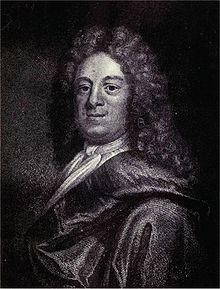
Ralph Thoresby, 1658-1725
I will be supporting this suggestion with reference to my current research into the life of Ralph Thoresby.[1] For those of you who are not familiar with the man, a brief introduction. Thoresby lived from 1658-1725, he was from a middling, trade background, but he was also an antiquarian, a member of the Royal Society, and the owner and curator of a museum in his home town of Leeds. His archive is very extensive and includes the diary that he wrote for the entirety of his adult life, as well as a large set of correspondence with friends, family, and the great and the good in ecclesiastical and intellectual circles. Thoresby was therefore a respected provincial practitioner, inspired by the Royal Society to the study of antiquities, natural curiosities and strange weather – the stuff of early modern science.
There is a plausible case for saying that Thoresby himself was one of the people – though he was relatively well off, he did not attend either of the universities and was a long way from the intellectual heart of the country in the south east of England. But in this post my focus will be on the way that Thoresby’s scientific activities bought him directly into contact with (even more) ordinary people’s experiences and voices. Continue reading
Laura Sangha
Last week, I delivered the introductory lecture for a second year undergraduate module, ‘Doing History’, and for various tedious reasons, I also recently spent some time reading, reflecting on and writing about why I consider history to be valuable. In the process, I conducted an entirely unscientific google trawl, trying to gauge what the general perception of the discipline was. I was struck by the fact that the popular or ‘commonsense’ perception of history encourages a rather limited assessment of its social and intellectual usefulness. What exactly do I mean?
Narratives and stories
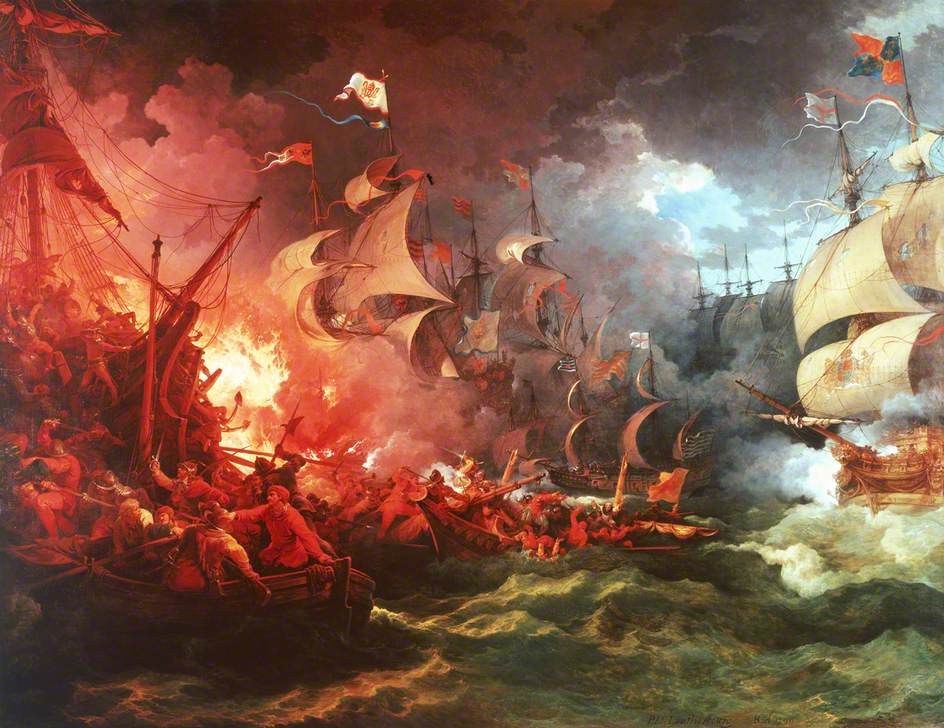
Drake’s defeat of the Armada – a rollicking yarn!
Perception: The past provides a seemingly endless supply of rollicking good yarns, from Henry VIII’s tortuous relationship status to Sir Francis Drake’s swashbuckling Caribbean adventures. These are easily converted into good reads.
That’s nice, but it doesn’t make history particularly valuable. Anyway, the best stories are made up ones. Continue reading
Mark Hailwood
This is the third and final post in a series introducing some key theoretical concepts through the history of food and drink (see here for the first, here for the second). The previous post concluded on Pierre Bourdieu’s point that the cultures of different social groups were relational to one another. But what was the nature of this relationship? It can be interpreted in a number of ways. Elias, for instance, as I mentioned in the previous post, tended to think that the cultural practices and preferences of the elites gradually ‘percolated’ down through the rest of society. Sometimes a similar argument is made with reference to the term ’emulation’ – the idea that lower social groups tend to ape the culture of higher social groups, and that this in turn causes those higher social groups to reinvent themselves to maintain their sense of distinctiveness and superiority.
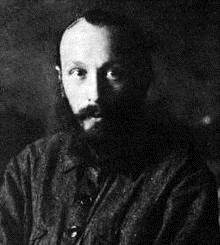
Bakhtin
A rather different way of looking at the relationship between the cultures of different social groups can be seen in our next concept that has proved popular with historians of food and drink – Mikhail Bakhtin’s notion of ‘carnival’. Bakhtin was a Russian literary critic, most famous for his book about the French Renaissance humanist Francois Rabelais, published in 1965 (although written under the Stalinist regime during WWII) Rabelais and His World. In the book, Bakhtin argued that Rabelais’ work provided a valuable insight into what he called the ‘folk culture’ of early modern Europe. If Elias’ conduct books could reveal the eating and drinking culture of European elites, what Bakhtin termed ‘official culture’, then Rabelais had written a carefully observed account of the consumption practices and dispositions prevalent amongst ordinary men and women. Continue reading
Mark Hailwood
In this second of three posts introducing some key theoretical concepts through the history of food and drink (see here for the first) I’m going to move on to think about some of those borrowed from sociologists. The last post ended by stating that a concern with change over time plays an important role in the types of theories historians tend to like and dislike: and it helps to explain why they have been taken with our next key concept – the notion of the ‘civilising process’.
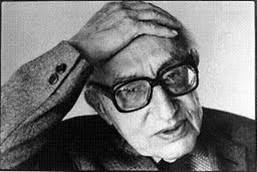
Norbert Elias
This was a theory first posited by the German sociologist Norbert Elias, back in 1939, but its main impact on Anglophone historians only came when it was translated into English in 1969, as: The Civilizing Process, Vol. 1: The History of Manners (1969). Its central claim was that between the middle ages (c.800AD) and the nineteenth century the manners of Europeans had become gradually more ‘civilised’ – by which he didn’t necessarily mean ‘better’ or more ‘progressive’ (he wasn’t passing judgement) but marked by increasing levels of self-restraint and self-control, especially with regards to violence, sexual behaviour, bodily functions, table-manners and forms of speech. By reading conduct manuals – guides to appropriate forms of social etiquette, a very popular genre – from across these centuries, Elias identified a shift away from an aristocratic honour culture in the middle ages which had seen aggression, violence, and the excessive consumption of food and drink as acceptable and laudable, towards an increasing sense of shame and repugnance towards all of these behaviours. Continue reading
the history of 'the unruly sort of clowns' and other early modern peculiarities
the history of 'the unruly sort of clowns' and other early modern peculiarities
An Open Access Graduate Course on Utopian Thought.
A blog about bodies and medicine c.1500 - 1780
Adventures in the world of history
history/folklore/writing
stories from a nineteenth-century prison
the history of 'the unruly sort of clowns' and other early modern peculiarities
Leverhulme Funded Project at University of Exeter: Adopting a New Methodological Approach to Early Modern Women's Work
Early Modern Material Culture
'Making good use of the things that we find / Things that the everyday folk leave behind': ramblings of an early modern historian
A blog (mostly) about early modern history
crime, women, digital history...
 the many-headed monster