[Dom Birch, Esther Brot and Jonah Miller are doctoral students at King’s College London. In this post, they set out why and how they think the diverse histories of early modern London can be integrated with each other and with larger national narratives, reflecting on a workshop on this topic that they ran in autumn 2018.]
Between 1500 and 1800 the city of London changed—a lot. It was over this period that we begin to see the development of a London that we might recognise. By the end of the eighteenth century the city had many of its modern-day hallmarks: political power was linked to the metropolis, it was a driver of fashion and popular culture, it was a centre of a globalised world, and the city had grown to include what would have previously been considered its suburbs. The existential changes in London’s nature, and the way in which the history of London can be linked to the history of England, make it a compelling place to study. Understanding early modern London means understanding how it transformed from its medieval origins to an archetype of modernity. This field of study has, however, faced several difficulties recently. So, with this in mind, in October we brought together a group of historians whose work on London we felt is particularly innovative to talk through what, exactly, early modern London was.
The idea for this workshop originally came from the recognition that we were all working on the history of London in some capacity. This may sound obvious but as historians we’re often trained to think of the work we do in certain ways. We all think of ourselves as social historians and within that label as social scientists (Dom), historians of government (Esther) or cultural historians (Jonah). Despite these different fields of study, we were all researching groups of people who lived in London and would often find ourselves together in the London Metropolitan Archives—using sources from London. It then became apparent that this wasn’t an issue faced by us alone. There are plenty of historians working either in or on London who wouldn’t see themselves as historians of London. They might instead have as a primary motivator a historical theme (religious history) or a group of people (foodsellers or guild members). We thought it would be worthwhile to bring these different perspectives together for a discussion on early modern London more generally, and to ask what different focuses and methods could bring to the study of the city.
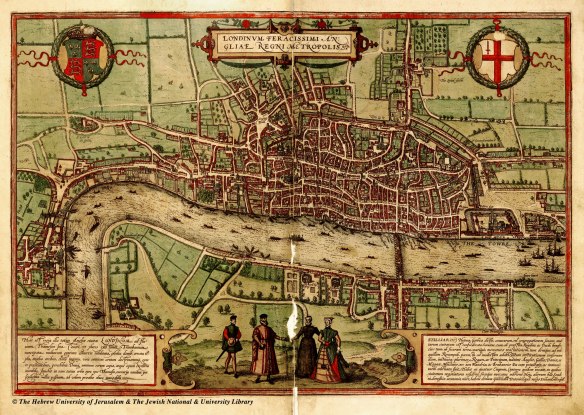
London in the late sixteenth century: too big for one historian?
As we started to plan the workshop it became obvious that there are many issues in the history of London that can’t be solved by one single historian, or a small group of historians. Continue reading
 In the following half-decade ‘the monster’ grew two new heads –
 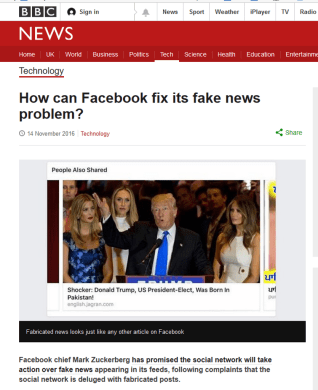 that fake news is something new and something alien to the ‘traditional print media’. In fact, the pattern of user-generated news that we see on contemporary social media platforms is closer to the original pattern of dissemination of news in the first age of print.