
Brodie Waddell
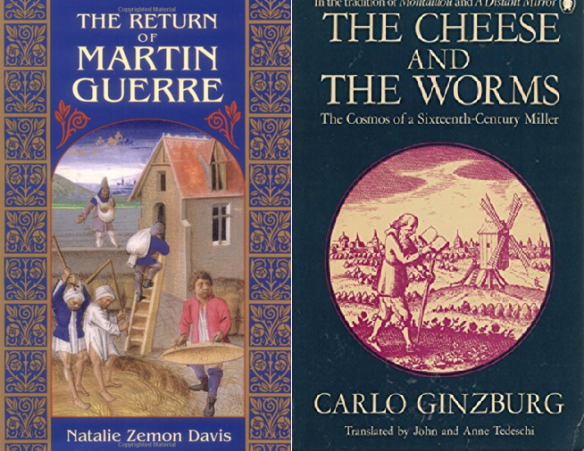
Ulinka Rublack, in her introduction to a recent symposium at the Institute for Historical research, argued that it was time for us to revisit ‘microhistory’. Partly, she said, this was because microhistory had been explicitly challenged by Jo Guldi and David Armitage in their History Manifesto for being too focused on narrow and specialist histories at the expense of the ‘big picture’. However, Rublack also suggested that microhistory has been misconstrued by the tendency among even sympathetic scholars only engage with the ‘classics’ of the genre – especially Carlo Ginzberg’s The Cheese and the Worms and Natalie Zemon Davis’s The Return of Martin Guerre – rather consider the wealth of new microhistories that have been written in recent decades.
As someone long fascinated by microhistory, it was wonderful to be able to come along to this event. I’ve written about defining it, branding it and defending it before on this blog, and I’ll be running an MA module on microhistory at Birkbeck in the coming year, so I was keen to hear more about the current scholarship, and I was not disappointed. It was a excellent event and it touched on facets of this concept that I had hardly considered before. It would be far too ambitious to attempt to summarise each of the six speakers much less the discussion that followed, but I thought it might be productive to draw attention to two angles that particularly caught my attention.
Microhistory as a meeting place
 Last week I asked historians on twitter what three books they would recommend for prospective students to read over the summer – those students starting a history degree in September. I got a lot of responses (thanks very much, brilliant #twitterstorians), and you can read the full list at the end of this post. Before you do, here are a few thoughts that struck me about summer reading for history students.
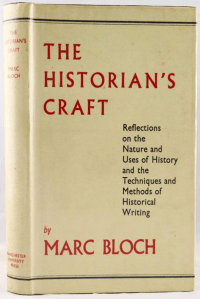 1) Students need to get to know the discipline, since what they did at school is not representative of it. So they should read ‘what is history’ books which explain why and how academics study the past. These might mainly cover historiography, or might be focused on issues that are fundamental to the discipline, i.e. what footnotes are, or why there is fiction in the archives. (See list section ‘The Historian’s Craft’).
 If you want to know more about employability then the
  The first challenge, and the one which has been taken up and answered with the most gusto, in the contributions to this symposium as well as in the scholarship more broadly, has been to disprove the notion of a shift to ‘iconophobia’ through the identification and presentation of concrete counter-examples. Religious imagery, religious music and religious drama did not cease to exist c.1580. It is worth pointing out at this juncture that Collinson’s article (perhaps unsurprisingly) stands up much better today upon re-reading than I had anticipated. Much of what people have challenged him on, he doesn’t actually claim. He doesn’t speak about religious music in general, for example; just godly ballads. He doesn’t speak about pictorial art in general, and explicitly rules out domestic decoration from consideration. His claims and evidence are much more limited than they are often taken to be, and therefore in a narrow sense they remain more or less correct.
  As Eamon Duffy and others have shown, the iconoclasts of the mid-16th century destroyed much of the splendour and symbolism of the late medieval church, and as Patrick Collinson suggested, some of the leaders of the second phase of the Reformation in the late 16th century wanted to narrow the range of religious imagery even further. But not only is it open to question whether these ‘iconophobes’ were sufficiently well-placed or organized to bring about the decisive further shift in English culture that Pat thought he could detect, but also it may be suggested that the impact of iconoclasm in mid-Tudor England had not been as severe as in Reformed churches abroad or in Scotland. This was partly because the English authorities deployed a narrower definition of idolatry, and partly because at all levels of clergy and laity there appears to have been a reluctance to go beyond the bare minimum of destruction authorized, especially if the offending objects were hard to reach or expensive to replace. As a result a significant proportion of fittings, decorations and monuments were left alone until the 1640s, or even the 19th century and beyond, as in the ‘Shakespeare church’, Holy Trinity, Stratford-upon-Avon, which has two 15th-century images of Christ, scores of angels, and symbols such as the three nails used to crucify Christ, and the five stigmata of the wounds he received.
 the many-headed monster