Alehouse Characters #3: The Wastrel Husband

Mark Hailwood

This is the third in a series of posts written to mark the publication of my book, Alehouses and Good Fellowship in Early Modern England, which is now available in paperback. Monster readers can take advantage of a special offer to get 25% off (getting the book for just £13.49) by using the promotion code ‘BB125’ when ordering here. Each post in this series focuses on a character that features in the book, and uses them to highlight some of my key themes and arguments.

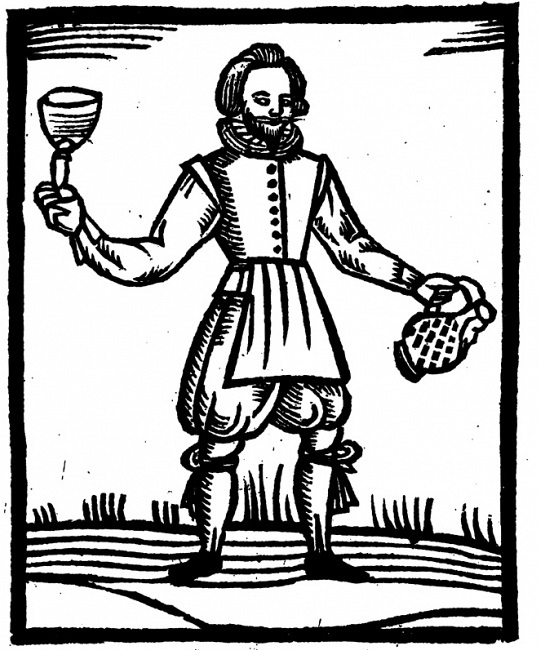
As we saw in the previous post, the rising popularity of alehouses and good fellowship in seventeenth-century England met with considerable opposition from Church and State. But concerns over developments in England’s drinking culture did not just emanate from hostile ruling elites—from the ‘top down’—they were also voiced within popular culture. This can be seen most clearly in contemporary anxieties that ‘good fellowship’ spawned ‘wastrel husbands’. One such example is the central character of this post: John Jarret.
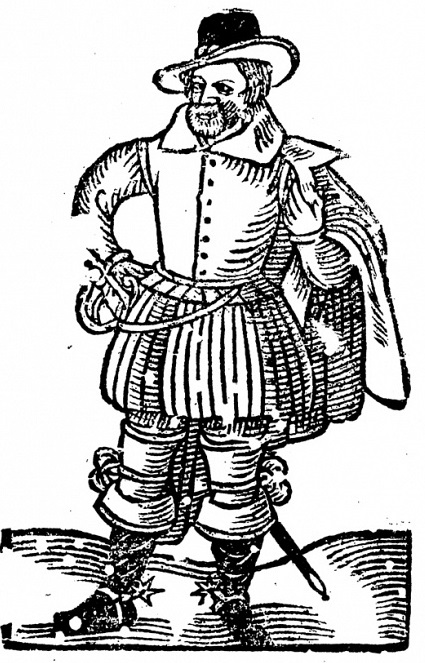
John Jarret

John Jarret

Jarret, like Roaring Dick of Dover, is the central character of a broadside ballad, and whilst both men are keen partakers of alehouse good fellowship, John Jarret’s drinking is portrayed in rather more problematic terms than Roaring Dick’s. Rather than being a celebration of good fellowship, the ballad featuring Jarret—narrated by his long suffering wife—is a warning about its dire consequences.[1] Continue reading
Alehouse Characters #2: The Drunken Constable

Mark Hailwood

This is the second in a series of posts written to mark the publication of my book, Alehouses and Good Fellowship in Early Modern England, which is now available in paperback. Monster readers can take advantage of a special offer to get 25% off (getting the book for just £13.49) by using the promotion code ‘BB125’ when ordering here. Each post in this series focuses on a character that features in the book, and uses them to highlight some of my key themes and arguments..

On an October evening, in the year 1604, a weary traveller by the name of John Oultings entered Turner’s alehouse in the Essex parish of Layer Marney. It was around 6 o’clock, and Oultings ordered himself some beer and cheese, and requested a room in which to rest overnight. It was the kind of routine stopover that was a common occurrence in England’s seventeenth-century alehouses, as the institution represented an important component of the country’s hospitality infrastructure.

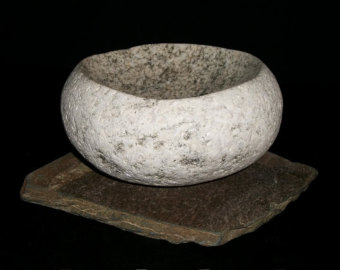
So far, then, nothing particularly remarkable. But what Oultings was to witness during his stay was a sequence of rather more intriguing events. On his arrival he found John Lufkin – the central character of this post – drinking with one Thomas Marsh and several other men. Whether Oultings joined these men is not clear, but at around 9 o’clock he saw John Lufkin call to the alehousekeeper to bring forth ‘a huge great stone pot’, which contained ‘very near two gallons’ (that’s 16 pints) of beer, a vessel that the drinkers referred to as ‘Fowler’—a rather odd nickname for a drinking vessel, but its provenance will become clear. Oultings was not interested in participating in whatever drinking ritual was about to ensue, and retired to his bed chamber.

Bring forth 'The Fowler'!

Bring forth ‘The Fowler’!

Continue reading

Alehouse Characters #1: The Jovial Good Fellow

Mark Hailwood

This is the first in a series of posts written to mark the publication of my book, Alehouses and Good Fellowship in Early Modern England, which is now available in paperback. Monster readers can take advantage of a special offer to get 25% off (getting the book for just £13.49) by using the promotion code ‘BB125’ when ordering here. Each post in this series focuses on a character that features in the book, and uses them to highlight some of my key themes and arguments.

Meet our first alehouse character: Roaring Dick of Dover, the Jovial Good Fellow of Kent.

Roaring Dick of Dover

Roaring Dick of Dover

Roaring Dick is the narrator of an eponymous 1630s drinking ballad of the sort that would have been performed in, and perhaps even pasted onto the walls of, England’s seventeenth-century alehouses. Continue reading

Gunpowder, Treason and Plot III: Places and Practice

Laura Sangha

This is the third of three posts surveying the London Catholic community at the time of the Gunpowder Plot. View the first here and the second here.

Yesterday we discovered that records of fluctuating levels of persecution might in fact provide us with more information about shifting international relations and official anxieties than changing levels of commitment to Catholicism. In this final post I use more qualitative data in an attempt to flesh out our understanding of the Catholic community in London through an exploration of some of the most prominent sites of Catholic activity in the capital. Continue reading

Gunpowder, Treason and Plot II: The People

Laura Sangha

This is the second of three posts surveying the London Catholic community around the time of the Gunpowder Plot. View the first here. View the last here.

Recusant roll entry edit

Recusant roll entries can give details about social status.

Having established that there were lots of missionary priests about in Jacobethan London, my question today is: how much of an appetite was there for what Catholics were selling? We are fortunate in that recusant rolls survive for Middlesex from 1603-1625, so these provide part of an answer. Recusancy was the term applied to those who refused to attend Church of England services: from 1593 these people were punished with fines, property confiscations and imprisonment. Whilst not all people who were fined for refusing to take communion in Church were Catholics (they might be Protestant nonconformists), Jacobethan Puritans were less likely to avoid attending altogether, and more likely to attend begrudgingly, omitting parts of the service or disrupting the performance as part of a vocal protest. Records were kept of those people that were indicted, and these recusant rolls often give details about the identity and status of absentees, in the process historians have assumed that they furnish us with information about the Catholic community. Continue reading

Gunpowder, Treason and Plot I: The London Mission

Laura Sangha

This is the first of three posts on Catholics in England at the time of the Gunpowder Plot. The second, on recusancy is here. The third, on the places in London where Catholics were often found, is here.

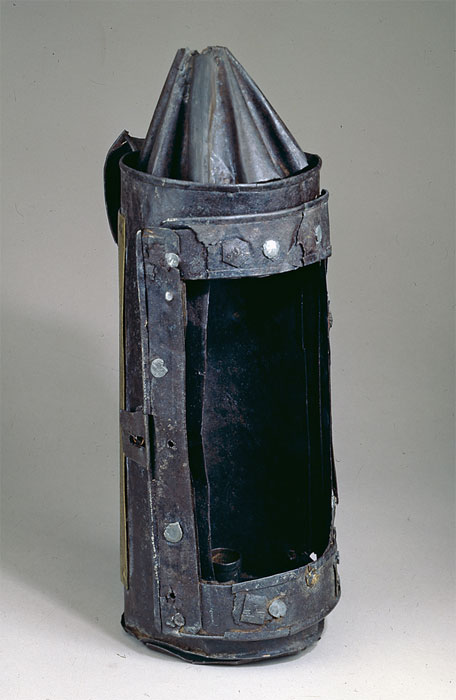
Allegedly Guy Fawkes’ lantern, now in the Ashmolean Museum

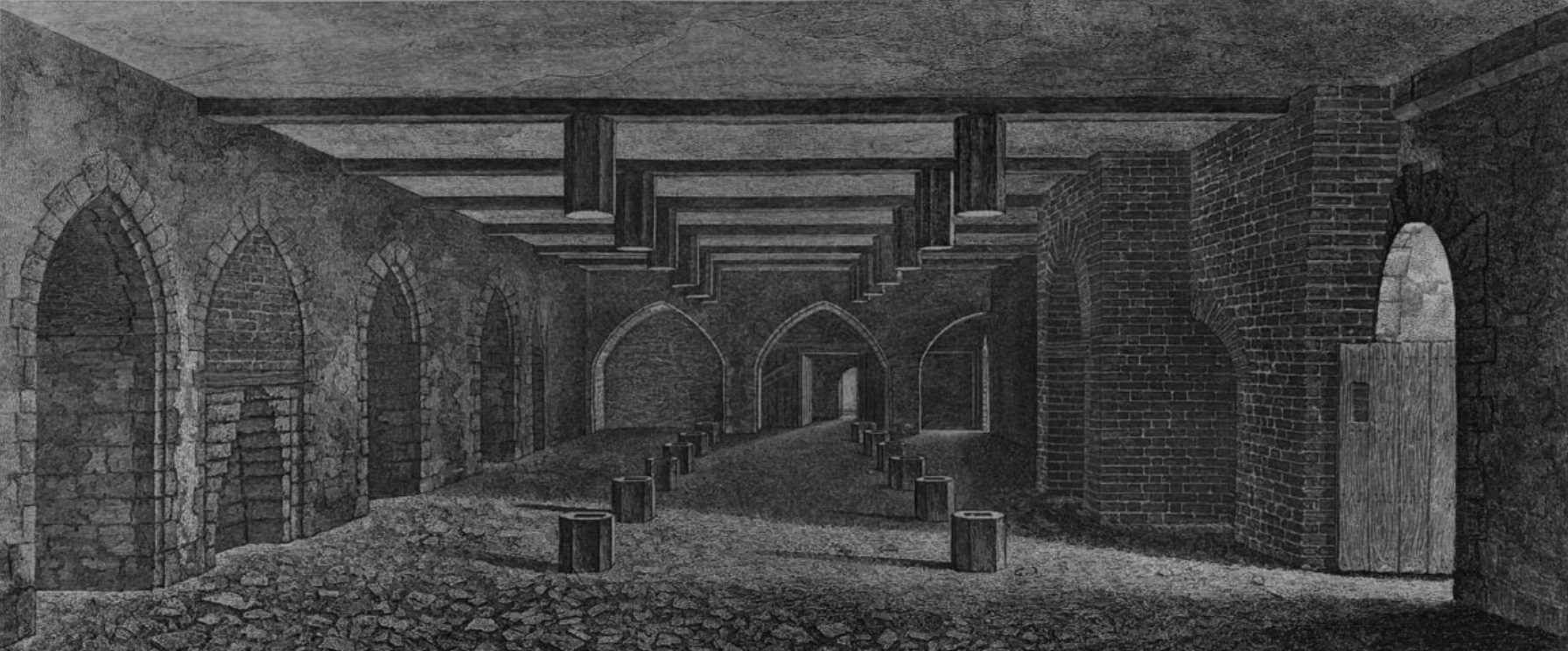
On 4 November 1605, during a search at around midnight on the eve of the state opening of England’s Parliament, a soldier by the name of Guy Fawkes was accosted by officials in an undercroft directly beneath the House of Lords. He was wearing a cloak and hat and carried a lantern, and a search of his person revealed several slow matches and touchwood. Nearby, under a pile of faggots and wood, thirty-six barrels of gunpowder were discovered. Fawkes was promptly arrested and taken to the king.

This was of course the moment at which the infamous ‘gunpowder treason’ plot was foiled, bringing to a halt the breathtakingly ambitious plan of a group of Catholic conspirators determined to reduce Parliament to rubble, to assassinate king James VI and I and his family, and to tear the heart out of the Protestant political establishment by killing in one fell swoop privy councillors, senior judges, the leading lights of the aristocracy and members of the House of Commons.

The undercroft beneath the House of Lords, 1799 engraving.

At the trial of the surviving conspirators, the Attorney-General Sir Edward Coke insisted that the plot had been invented by Jesuit priests, depraved fanatics determined to subvert the loyalty of the English people. Historians have interpreted this as part of a consistent policy on the part of James I to separate religious radicals (both ‘papists’ and ‘puritans’) from their more moderate allies, whereby he emphasised the subversive and dangerous nature of the radical fringe in an attempt to persuade their more moderate brethren of the utility and desirability of religious uniformity within the English nation. Continue reading

The Woolcomber’s World, Part IV: Births, deaths, marriages and fighting cocks

Brodie Waddell

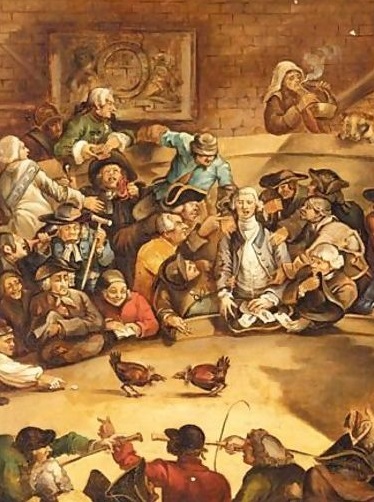
On 22 March 1697, ‘there were a great many fighting Cocks carried through Coxall on horsback in linen baggs’. So wrote Joseph Bufton in one of his eleven surviving notebooks.

Watching to cocks tear eachother apart: not as much fun as you might imagine

Watching two birds tear each other apart: not as much fun as you might imagine

But this odd little memorandum was not an isolated scribbling. It was, in fact, just one of about 180 entries in his Coggeshall chronicle, which he began in February 1678 and continued to May 1697. In it, we find festive celebrations, church business, unusual weather, family injuries, highway robberies and much else besides.

The entries from 1693, a fairly typical year, give a sense of the whole:

  • 11 Jan. 1693, John Bufton went to combing.
  • 4 Feb. 1693, my cousin Sparhawk was carried to prison.
  • 15 Feb. 1693, there was a bonfire made by the Crown for the joy that Squire Honeywood got the day of Sir Eliab Harvey and was not cast out of the Parliament and when he came home from Chelmsford through Coxall the night after he was chosen abundance of candles were lighted for joy.
  • 24 Mar. 1693, King William went through Kelvedon and went back again through Kelvedon 28 Mar.
  • early 1693, the new king’s arms and the 10 commandments new writ were set up in the church.
  • 1693, the Quakers made a new burying place in Crouches
  • 1 May 1693, the soldiers set up a Maypole at the Woolpack door
  • 18 May 1693, the poor did rise because the Bakers would not bake, because some of their bread was cut out the day before for being too light.
  • May 1693, my cousin Sparhawk came home.
  • beginning of May 1693 Francis Clark broke.
  • end of May 1693 the same month the Poor had Badges given them to weare which tis said were made of Pewter and Coggeshall Poor 1693 set upon them.
  • 1693, Mr Mayhew sold Coxall Lordship to Mr Nehemiah Lyde of London. 11 May he came first for his rent and 5 Jun kept court and Counsellor Cox was his steward.
  • June 1693, our 4th bell was carried to Sudbury to be new shot and brought home and the other were chipt to make them tuneable. They were first rung 6 July.
  • 30 Oct. 1693, King William went through Kelvedon.
  • 2 Nov. 1693, John Ancil had hung himself but was cut down in time.
  • 1693, a new pound was set up on Grange hill and the shambles was repaired.

Continue reading

‘The Rabble that Cannot Read’? Ordinary People’s Literacy in Seventeenth-Century England

Mark Hailwood

Those of us historians intent on exploring the world of ordinary women and men in the sixteenth and seventeenth centuries conduct a lot of our research by looking at surviving examples of what such people read–for instance, cheap printed broadside ballads–or of what they wrote–take, say, Joseph Bufton’s notebooks. These materials are fascinating and undoubtedly useful, but regular readers of this blog might understandably find themselves wondering about the validity of this approach, and asking themselves a simple but important question: to what extent could the lower classes of England actually read and write in the seventeenth century?

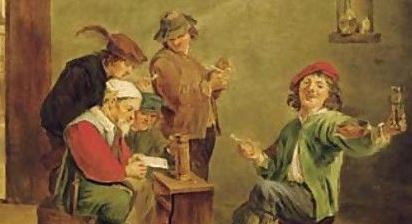
David Teniers the Younger 'Peasants Reading a Letter...' But could they?

David Teniers the Younger ‘Peasants Reading a Letter…’ But could they?

It’s a fair question, and has important implications. Does this material really provide a window into the minds of the most humble people in Tudor and Stuart society, or were reading and writing skills the preserve of the more affluent, or at least the middling, classes of society? After all, in 1691 the puritan writer Richard Baxter had described his lower-class neighbours as ‘the rabble that cannot read’. Was this fair? Continue reading

The Woolcomber’s World, Part III: Rich clothiers, poor combers and the obscurity of early modern occupations

Brodie Waddell

Whether you’re a historian, a hairdresser or a helicopter pilot, you may well define yourself by your occupation. The same was true in the early modern period, as when legal scribes added ‘labourer’, ‘weaver’ or ‘yeoman’ after each and every name in their records.

Joseph Bufton, the Essex diarist and sermon-goer, was no different in some ways. His father, John, was listed as a ‘clothier’ in at least four documents between 1645 and 1692. His brother, also John, was likewise a ‘clothier’ in 1671 and 1695. Joseph himself was described as a ‘clothier’ when he served as a trustee for a local charity in 1695 and again when he made up his will in 1718. He was, then, a clothier in a family of clothiers.

So why have I titled this series ‘The Woolcomber’s World’? I’ve used that label because Joseph Bufton was – I think – a woolcomber for most of his life, closely linked with the trades of fulling and combing throughout his time at Coggeshall.

Isaac van Swanenburg's 'The Removal of the Wool from the Skins and the Combing' (1595)

Isaac van Swanenburg’s ‘The Removal of the Wool from the Skins and the Combing’ (1595)

The evidence for this comes from yet another almanac-turned-notebook, a Goldsmith’s Almanack of 1686, which Bufton later described as the one which ‘has the orders in Comber’s book, &c.’. In it he recorded the ordinances of his guild, warrants from magistrates to protect the craft, the articles of the journeymen’s ‘purse’, and of course several lengthy poems lauding the glories of the trade. Continue reading

When history and holidaying collide

Brodie Waddell

The international conference is a well-loved feature of academic life.

Its scholarly value should not be underestimated: it brings together researchers who might otherwise never have a chance to talk in person and can help to break down the boundaries between different national research cultures. It is too easy, especially as a Britain-based scholar of British history, to miss out on all of the excellent and often complementary work going on in other languages and in other places. Spending a few days in a foreign city discussing research with European or North American colleagues often provides a fresh perspective that can be very difficult to get at home, even in a cosmopolitan city like London.

However, international conferences aren’t just vital for ‘knowledge exchange’ and ‘developing strategic partnerships’, they’re also a nice perk of the job. Indeed, I’d go so far as to say they’re a customary perquisite that many academics would defend all the way to the Tyburn tree. They are usually at least partly subsidised and, if nothing else, provide a good excuse to fly off to somewhere you might otherwise never get around to visiting.

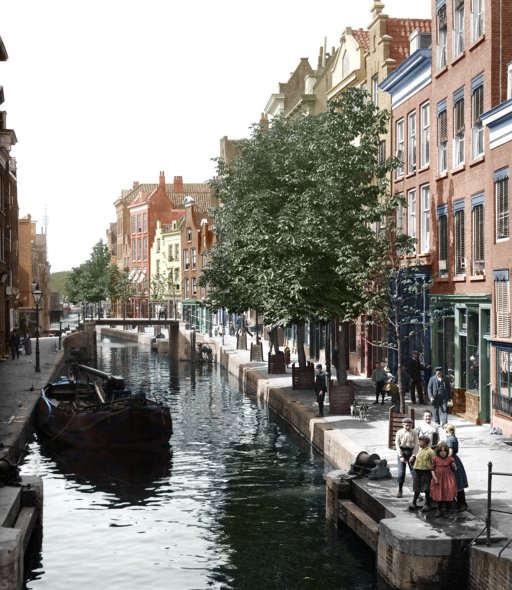
A Rotterdam canal in 1904. Note the narrowboat on the left, just chillaxin'

A Rotterdam canal in 1904. Note the narrowboat on the left, just chillin’

My first opportunity came whilst I was still a PhD student at Warwick in 2008 when the Social History Society decided to host their annual conference at Erasmus University Rotterdam. As this was one of the first times I’d presented a paper, I was inevitably nervous. Thankfully, some unusually sensible Dutch laws made relaxation easy … I remember with great fondness unwinding at the end of the day next to a picturesque old canal with a well-deserved local delicacy, watching the narrowboats slide calmly past.

Sometimes, however, I find that the ‘scholarly’ and the ‘recreational’ parts of international conference-going can get all mixed up together. Continue reading