What is to be done? Seven practical steps for historians

Brodie Waddell

MI0000444321I’m very grateful to all of you who’ve already offered your thoughts on how we can improve the history profession. I agree with most of the comments on my previous posts on academic employment and practical responses – in fact some of the suggestions below are borrowed from those comments. However, I promised that I would offer my own tuppence so here I’ll try to set out some steps that we can take individually or collectively. Most of these are quite minor, but hopefully they are a good start. They aren’t in order of priority, but the first four are generally about gathering and publishing information and the rest are about more direct action. Continue reading

What is to be done? Mending academic history

Brodie Waddell

The study of history in Britain is not in crisis. The numbers set out in my post last week show that the last few decades have been a period of massive expansion for the field. There are more people ‘doing history’ at all levels of higher education, from new undergraduates to doctoral students and teaching staff. What’s more, I’d argue that public interest in history has been growing as well, a point brought home to me by the extraordinary response to the ‘History from Below’ and ‘Voices of the People’ online workshops that we’ve hosted.

It would, however, be irresponsible for historians like myself – who enjoy secure academic positions – to overlook the very real problems that confront the history profession today. In my recent posts I’ve highlighted two specific issues: the rapid growth in the number of doctoral students who are unlikely to obtain a permanent university post and, relatedly, the substantial number of early career historians trapped in precarious ‘casual’ employment. One might also add the under-representation of women in the academic upper ranks, the collapse in part-time studies, and the rising debt burden imposed on our students, among other things.

My previous posts provoked a flurry of valuable responses including one from Peter Mandler and another from Adam Smith, respectively President and Honorary Secretary of the Royal Historical Society. I’m very grateful to both of them for their feedback, which not only augmented and corrected some of my own conclusions, but also invited me to think about what practical measures the RHS (or other bodies such as the IHR) could take in the future. What sort of data should they be collecting and how? What kind of advice or information should they be providing? Is there anything else they can be doing to help to counter-act these problems?
i3rzjg8ciyls3ruxcheaThis presents an obvious chance for me to pretend to know everything there is to know about the historical profession in Britain and make some sagacious pronouncements about ‘what is to be done’. However, in the interests of continuing the conversation, rather than closing it off, I’m going to restrain myself, at least momentarily. Instead, I’d like you, whatever your position or career stage, to offer your thoughts in the comments below (or on twitter, tagging me, which I’ll post here). I will add my own ideas in the comments in the next day or so, some of which I hinted at in the conclusions of the previous post. But in the meantime, let’s find out what the rest of the historical community thinks.

Students, PhDs, historians, jobs and casualisation: some data, 1960s-2010s

Brodie Waddell

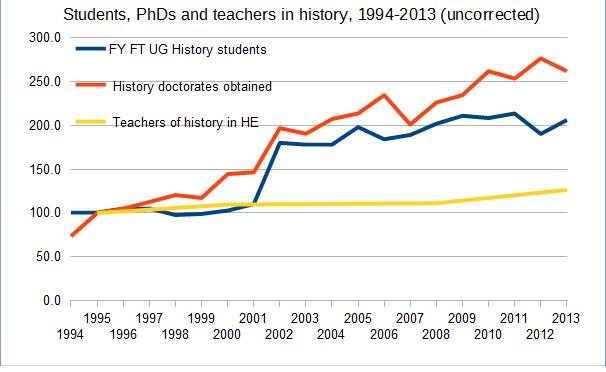
Over the last two decades, the number of new PhDs in history has grown much faster than the number of new undergraduate students or the number of academic staff in the UK. That’s my main finding from far-too-many hours spent rooting through old spreadsheets.

Last week, I published a post with some rough and very rudimentary analysis of the number of PhDs compared to the number of undergrads in ‘historyish’ fields. My conclusion was that the ‘supply’ of PhDs was rising faster than the ‘demand’. Since then, thanks to feedback from a wide range of commenters on the blog and on twitter, and thanks especially to Rachel Stone for alerting me to some additional data from the Institute for Historical Research, I’ve been able to refine and extend my conclusions. Although the depressing headline is roughly the same, I thought it would be helpful to set out what I’ve found.

The picture since 1995

The most solid and consistent figures begin in 1995/96, when we have numbers for first-year full-time undergraduates studying history (6,123), doctorates obtained in history (239), and teachers of history in higher education (2,665). We then have figures right through to 2013/14, when there were 12,615 of the same undergrads, 625 PhDs, and 3,366 teachers. When we index all these numbers to 100 in 1995/96, this suggests the number of undergrads has risen by 106%, PhDs by 162%, and teachers by only 26%.

Students, PhDs and teachers in history, 1994-2013 (uncorrected) Continue reading

The job market for historians: some data, 1995-2014

Brodie Waddell

[UPDATE 08/09/15: Please read the updated and expanded version of this post here.]

On August 24th, Matthew Lyons published a piece in History Today on ‘the plight of early career researchers’. Reading the comments there, on twitter and on other blogs, it is clear that he hit a raw nerve.

As commentators pointed out, some of his assertions were unfounded (e.g. ‘many if not most academics disdain teaching’, ‘[ECRs] are offered no career development or pastoral support’). Nonetheless, his claim that newly-minted historians tend to struggle rings true. Between us, the four heads of the many-headed monster have had plenty of experience with job insecurity, poorly-paid positions, forced transience, bad working conditions and other early career problems.

However, a post from William Whyte – a historian of universities – made a very good point: there is nothing new about claims of a ‘crisis’ in academic employment. We need to be careful not to slip into nostalgia for a lost ‘golden age’ when there were jobs aplenty. As historians, we should be particularly critical of ‘fundamentally presentist, ahistorical – indeed anti-historical – peddling of myths’.

In the interests of bringing a bit more ‘history’ to this discussion, I tried to dig up some ‘historical’ data on PhDs, students, and jobs. Continue reading

What is history for? Or: Doing history/thinking historically

Laura Sangha

Last week, I delivered the introductory lecture for a second year undergraduate module, ‘Doing History’, and for various tedious reasons, I also recently spent some time reading, reflecting on and writing about why I consider history to be valuable. In the process, I conducted an entirely unscientific google trawl, trying to gauge what the general perception of the discipline was. I was struck by the fact that the popular or ‘commonsense’ perception of history encourages a rather limited assessment of its social and intellectual usefulness. What exactly do I mean?

Narratives and stories

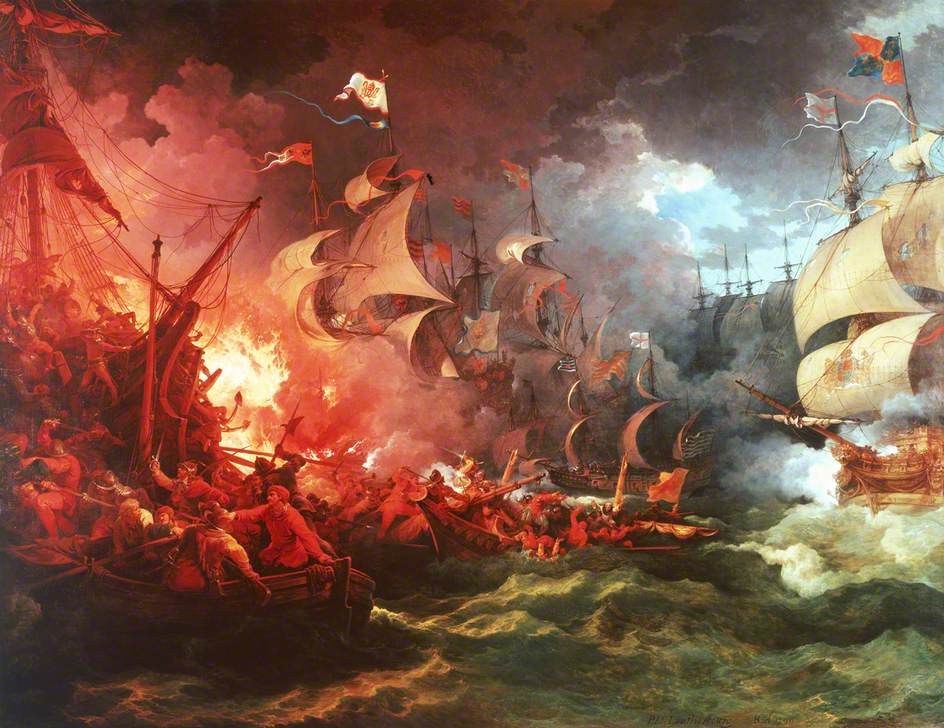
Drake’s defeat of the Armada – a rollicking yarn!

Perception: The past provides a seemingly endless supply of rollicking good yarns, from Henry VIII’s tortuous relationship status to Sir Francis Drake’s swashbuckling Caribbean adventures. These are easily converted into good reads.

That’s nice, but it doesn’t make history particularly valuable. Anyway, the best stories are made up ones. Continue reading

Aspiring to a New Jerusalem: how to reform a society, Part II

Laura Sangha

Once you start looking, it is surprising how many politicians, poets and pioneers have found the answer to the question ‘what kind of society do you want?’ in Scripture, taking as their model the New Jerusalem described by John of Patmos in Revelation. John’s ecstatic vision predicts that following Judgement Day, New Jerusalem will be the earthly location where all true believers will spend eternity with God. This heavenly society became the model that people would evoke for centuries to come. Why was it so enduring?

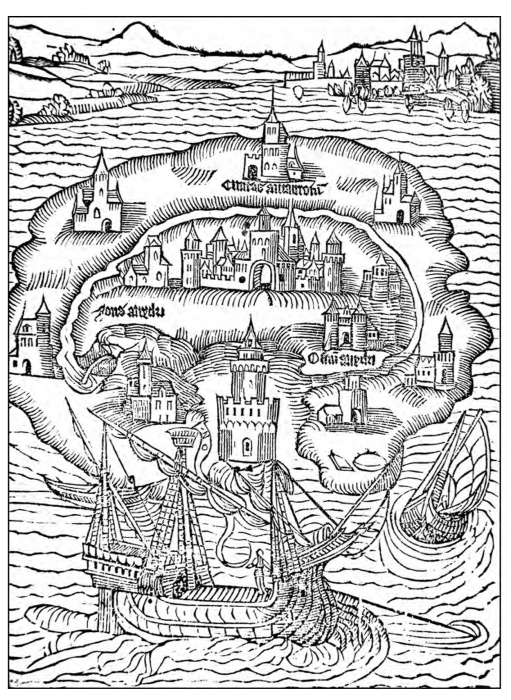
Another aspirational model - Thomas More's Utopia.

Another aspirational model – Thomas More’s Utopia.

Ideal Aspirations for All

As we saw in the previous post, the concept of a New Jerusalem is not static, it is a flexible idea that is taken up and defined according to the historical context it is used in, and in line with the intentions and aims of the person evoking it. It can be used to support the establishment of racial equality, the welfare state, or (perhaps?) resistance to industrialisation. But in each of the examples I discussed, you can see that the New Jerusalem is something to aspire to, it is an ideal society, a target, a goal. It is a place where injustice, discrimination and fear have no place, and where people can develop to the full, in co-operation with others. Continue reading

Thinking about doing a PhD: who, where and how?

Brodie Waddell

Over the past few months, I’ve been getting some enquires from people thinking about doing a PhD in history. I’ve found myself repeating the same thing in many cases, so I thought I’d set it out here in case it’s helpful for current MA students thinking about the possibility. In most cases, there are important personal factors to consider, but I think there are a few pieces of advice that apply more generally.

Note, however, that as an ‘early career’ academic, there is still plenty that I’m learning about the whole process, despite having finished my own PhD over five years ago. Your own thoughts would be very welcome.

Don’t do it!

When a PhD goes horribly wrong, it often turns into a nightmarish snake-cat that stalks you in the library...

When a PhD goes horribly wrong, it often turns into a nightmarish snake-cat that stalks you in the library…

Obviously I don’t believe that or I wouldn’t be writing this post, but I think there are lots of good reasons to not do a PhD right now, the most important being the terrible job market for new humanities PhDs. As innumerable blog posts and articles have said before: even if you are extremely smart, original, hard-working and self-sacrificing, there is a decent chance that you won’t be able to find a permanent academic job. If you are aware of that, and want to do a PhD anyway – perhaps because you’re not doing it to get an academic job, or perhaps because you are young, carefree and willing to roll the dice – then please read on… Continue reading

The editing game…

Jonathan Willis

editing-ratesRegular monster readers may have noticed that my productivity as a blogger has dipped in recent months. I’m not trying to claim extenuating circumstances, but I attribute this (at least in part) to the fact that I’m currently involved in the production of three edited volumes of essays (two as co-editor, and one as sole editor). Editing other people’s work is a great privilege, and most of the time it’s immensely rewarding and enjoyable. Editing a volume of essays, though, is also extremely time consuming, and trying to coordinate your own hectic work patterns with the schedules of ten other academics, perhaps a dozen or maybe more, is often easier said than done. In this post, I’d therefore like to spend some time reflecting on my experience of ‘the editing game’, and the rewards it can bring, as well as some of the potential pitfalls to avoid. If you’re short of time, why not scroll straight to the bottom to see my top 10 dos and don’ts for editors! Continue reading

When history and holidaying collide

Brodie Waddell

The international conference is a well-loved feature of academic life.

Its scholarly value should not be underestimated: it brings together researchers who might otherwise never have a chance to talk in person and can help to break down the boundaries between different national research cultures. It is too easy, especially as a Britain-based scholar of British history, to miss out on all of the excellent and often complementary work going on in other languages and in other places. Spending a few days in a foreign city discussing research with European or North American colleagues often provides a fresh perspective that can be very difficult to get at home, even in a cosmopolitan city like London.

However, international conferences aren’t just vital for ‘knowledge exchange’ and ‘developing strategic partnerships’, they’re also a nice perk of the job. Indeed, I’d go so far as to say they’re a customary perquisite that many academics would defend all the way to the Tyburn tree. They are usually at least partly subsidised and, if nothing else, provide a good excuse to fly off to somewhere you might otherwise never get around to visiting.

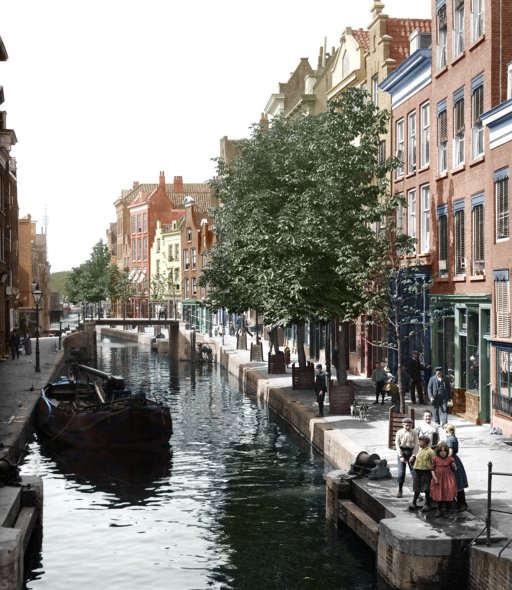
A Rotterdam canal in 1904. Note the narrowboat on the left, just chillaxin'

A Rotterdam canal in 1904. Note the narrowboat on the left, just chillin’

My first opportunity came whilst I was still a PhD student at Warwick in 2008 when the Social History Society decided to host their annual conference at Erasmus University Rotterdam. As this was one of the first times I’d presented a paper, I was inevitably nervous. Thankfully, some unusually sensible Dutch laws made relaxation easy … I remember with great fondness unwinding at the end of the day next to a picturesque old canal with a well-deserved local delicacy, watching the narrowboats slide calmly past.

Sometimes, however, I find that the ‘scholarly’ and the ‘recreational’ parts of international conference-going can get all mixed up together. Continue reading

A Reformation Roundup

Jonathan Willis

Last week, I had the very great pleasure of organising and attending the annual meeting of the European Reformation Research Group, and attending and presenting at the bi-annual Reformation Studies Colloquium, back-to-back, at Murray Edwards College (formerly New Hall), Cambridge. I heard 36 papers over 72 hours (including my own), and on Wednesday alone I began conferencing at 9am, didn’t finish until nearly 9.45pm, and heard 14 different papers over the course of the day. What I want to do in this post is to reflect on some of what I heard, and on what it says about the exuberance of reformation studies today. I have three disclaimers. The first is the Colloquium at times had four sessions running in parallel, so my experience of the conference was incomplete, and tailored around my own interests as a historian of the English reformation. The second is that I think it would be a bit tedious to summarise every one even of the 36 papers I heard, and so I’m going to be selective, and pick out papers relating to a few of the themes that stuck out to me most prominently. That means I won’t be mentioning some brilliant work, but I don’t think that can be helped – it would be great if other delegates could add some of their highlights to the comments below! Finally, apologies if I’ve misrepresented anybody’s ideas in what follows. If that’s the case, just let me know, and I will correct it. Continue reading