A Page in the Life of Betty Fothergill: Marriage and Liberty in the Diary of Teenage Girl

[In our mini-series ‘A Page in the Life’, each post briefly introduces a new writer and a single page from their manuscript. In this post, Dr Esther Sahle (@EstherSahle) of the University of Bremen offers us a glimpse of the diary of a young Quaker girl in eighteenth-century London, a manuscript which has been almost entirely neglected by historians.]

On October 19th, 1769, ‘at 6 o’clock in the morning’, and with ‘unspeakable regret’, seventeen-year old Betty Fothergill of Warrington climbed into a carriage bound for London.[1] Contrary to expectation, she ended up having a fantastic time. Spending the winter months visiting relatives in the capital, she recorded her adventures and reflections in a diary. This tells of countless social engagements with cousins and friends. Their main topic of conversation appears to have been their peers’ marriages and marriage prospects. With biting irony Betty dissected the motives – romantic, financial, incomprehensible – behind her friends’ matches. Her commentary on love and marriage at times is reminiscent of Jane Austen.
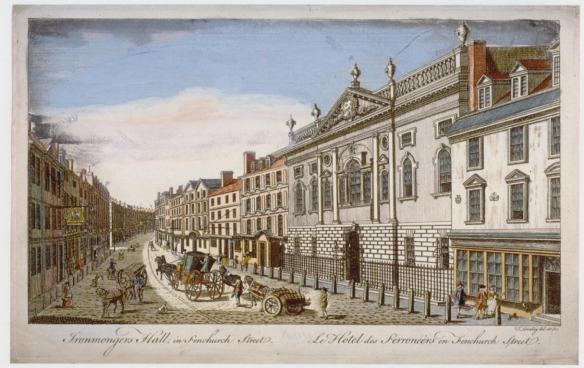
Yet, in spite of its literary merit, this unusual document has been all but ignored by scholarship. The only publication that draws on it, uses it merely as a source of information on her uncle – the better-known Dr John Fothergill.[2] On the page I have chosen for this post the eminent doctor also makes an appearance. Of interest here, however, is not him, but the young people’s reaction to a suggestion he makes. Betty wrote: ‘My Uncle […] drew us forth into a dispute upon the prerogative of husbands and wives. He insisted upon blind obedience of the latter to the former’. His audience was scandalized: ‘we as strenuously opposed him.’

Picture the scene: the uproar, the talking over each other, the indignation. Continue reading
A Page in the Life of Sarah Savage: Love Among Women

[In our mini-series ‘A Page in the Life’, each post briefly introduces a new writer and a single page from their manuscript. In this post, Amanda E. Herbert (@amandaeherbert) introduces us to a diary-writing woman and her extraordinary relationship with a female friend. Amanda has explored the diary in more detail in her new Gender & History article, ‘Queer Intimacy: Speaking with the Dead in Eighteenth-Century Britain’, and her book on Female Alliances.]

Sarah Henry Savage (1664-c.1751) had a very hard time making friends.  A middling-sort Nonconformist from Cheshire at the turn of the eighteenth century, she lived at the edges and borders of early modern life: financially, spiritually, socially, and geographically, Sarah Savage didn’t – and sometimes, deliberately chose not to – fit into the traditions and standards which governed her society.[1]

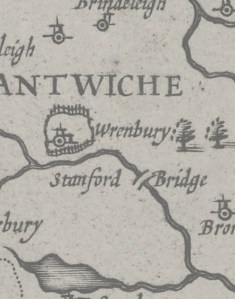
Sarah Savage - Wrenbury on Speed map of Cheshire

Sarah Savage’s hometown of Wrenbury in Cheshire on John Speed’s map of 1614

But Savage had one great friend: Jane Ward Hunt.  Hunt and Savage shared a social network, a common faith, a sense of family by fostering children at one another’s homes, and perhaps most importantly, their time: in Savage’s papers, she recorded that the women exchanged visits, walks, sermon-notes, meetings, and countless letters over the course of their friendship.  Savage and Hunt shared what I have termed a ‘queer intimacy’:  a relationship which distorted traditional gender roles and gendered writing practices, and which was imbued with love, longing, and same-sex desire, with its many nuances, silences, and degrees of feeling.  Savage’s and Hunt’s bond was particularly and peculiarly shaped by spiritual strangeness: religious dissent, and its concomitant refusal to conform, its celebration of difference.

When Jane Hunt died unexpectedly in early middle age, Savage was utterly bereft.  She wept constantly.  She suffered from insomnia and, when she did manage to sleep, endured troubled dreams about Hunt and their lost alliance.  She wrote guiltily in her diary that she felt she was mourning excessively, but could not control her emotions; although she believed that she ‘should lay aside every Weight that would hinder my joy’, Savage noted sadly, this was an impossible task, for ‘well may this world be stiled a vale of Tears’.[2]

Continue reading

Seventeenth-century England: A Symposium to celebrate Professor Bernard Capp’s 50 Years at Warwick

Laura Sangha

On Saturday 20 October I had the great pleasure of returning to my alma mater to attend ‘Seventeenth-Century England’, a symposium to mark and celebrate Professor Bernard Capp’s fifty years at the University of Warwick. All of the many-headed monster co-authors were fortunate enough to benefit from Bernard’s advice and knowledge when we were postgraduates at Warwick in the 2000s, so this review of the Symposium is our way of joining the chorus of congratulations and commendations that characterised the day.

Fifty years’ service.

Professor Capp was appointed as Lecturer in History in 1968, when Harold Wilson was Prime Minister, the Kray twins were arrested, the M1 was completed, and the Race Relations Act was passed. The University of Warwick had admitted its first undergraduates just four years earlier.

alex W

Alexandra Walsham exhorting us to undertake our own ‘generation work’

Whilst at Warwick Professor Capp became established as one of the leading historians of early modern England, his teaching and publications demonstrating an extraordinary breadth of research interests and expertise. The Symposium organisers, Peter Marshall and Naomi Pullin, did an excellent job of creating a programme that gave space to all the themes that underpin this work. Many papers explored gendered aspects of the seventeenth-century as well as the ‘religious marketplace’ of the age. Amanda Flather discussed the impact of Laudian ceremonialism on women worshippers, explaining how matters of conscience could be corrosive of female obedience. Tim Reinke-Williams regaled us with the masculine ‘banter’ of the early modern jestbook and laid bare the emotions that structured them. Ann Hughes’ paper on dissenting culture in Restoration England revealed the ways that religion connected single women to broad social networks and kinship. Hughes’ focus on the Gell family of Hopton Hall and the siblings in the family connected neatly to Alexandra Walsham’s paper on the ‘revolutionary generation’ of the 1640s and in particular the Fifth Monarchy Men, religious radicals bonded in solidarity by their conception of Christian history and the conviction that they were the ones to carry out a turbulent age’s vital ‘generation work’. Continue reading

What’s in a name? Fact and Fiction in Family History: Part II

This is part 2 of a couple of posts written by guest blogger Robyn Noble. You can view the first post here

Laura Sangha writes: I am delighted to introduce a very special pair of posts written by guest blogger Robyn Noble. Robyn currently works at the London Palladium but not so long ago she was studying for her BA in History and Philosophy at the University of Exeter, where I had the great fortune of teaching her sixteenth- and seventeenth-century religious history. Robyn and I have stayed in contact since her graduation and recently we have been discussing her exploration of her family history. Fascinating in isolation, it became clear that Robyn’s research touched on many of the regular themes discussed on the many-headed monster, particularly relating to life-writing, history from below, and social identity. Robyn was enthusiastic when I suggested that she should write something about it for the blog, and these two posts are the result. Whilst not an early modern life, by drawing on and contextualising one extract from her great-grandfather’s journal, Robyn’s posts complement our ongoing ‘Page in Life’ series, since it explores a text that tells the story of a life in a self-conscious way.

Portrait

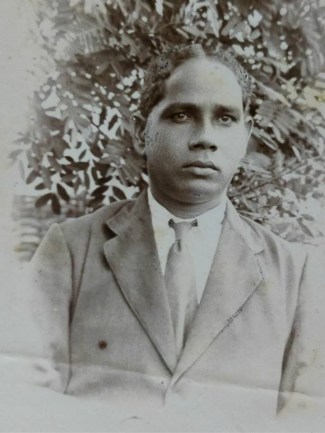
Bharat Chandra Nayak was born in March 1887 and was one of seven siblings. He married Sakrabati Devi and the family he created with her was orthodox in some ways, yet very progressive in others. For Bharat believed that independence for women could only be attained if they were given a modern education, which was unheard of in India at the time. From an early age, his daughters were given a lot of literature to read, and as a result they all had a love of the written word. Indeed, this is a trait which is still very much evident within the family, including for myself. Bharat later admitted them into a school where English was taught and both he and his daughters were subjected to shaming and social boycott as a result. All of the daughters went on to become at least post-graduates, with some becoming doctors, teachers and university professors. It seems unlikely then, that someone with Bharat’s broadminded view of women would have cared so little for his daughters that he would have believed his lack of sons to be a family curse. Rather, we find that Bharat was a man who was so devoted to his daughters that he was willing to face social ostracization if it meant that he could give them a modern education.  Continue reading

What’s in a name? Fact and Fiction in Family History: Part I

Laura Sangha writes: I am delighted to introduce a very special pair of posts written by guest blogger Robyn Noble. Robyn currently works at the London Palladium but not so long ago she was studying for her BA in History and Philosophy at the University of Exeter, where I had the great fortune of teaching her sixteenth- and seventeenth-century religious history. Robyn and I have stayed in contact since her graduation and recently we have been discussing her exploration of her family history. Fascinating in isolation, it became clear that Robyn’s research touched on many of the regular themes discussed on the many-headed monster, particularly relating to life-writing, history from below, and social identity. Robyn was enthusiastic when I suggested that she should write something about it for the blog, and these two posts (the second part will be published tomorrow) are the result. Whilst not an early modern life, by drawing on and contextualising one extract from her great-grandfather’s journal, Robyn’s posts complement our ongoing ‘Page in Life’ series, since it explores a text that tells the story of a life in a self-conscious way.

Robyn Noble

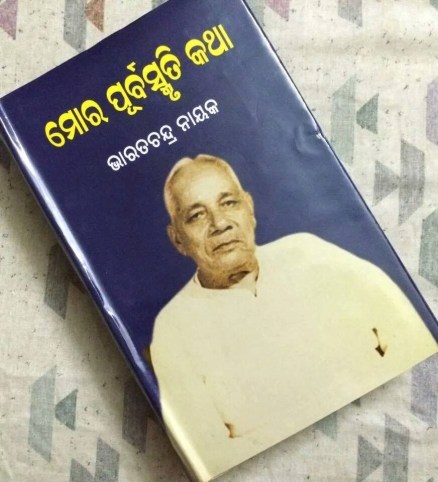
Last year, whilst researching my grandfather, an Indian man whom I never knew, I stumbled upon his whole extended family. An avid diary writer myself (I have filled nineteen notebooks in just under ten years), I was ecstatic to learn that my great-grandfather, Bharat Chandra Nayak, kept a diary which he wrote in every day. These diaries went on to form the basis for his published memoir, a book which my new-found family assured me would shed a lot of light on these relatives I had just discovered.

Bibhus book

Bharat’s memoir, Mora Purbasmruti Katha (Tales of My Past Recollections) was written in 1964, and in 1967 it went on to receive the Orissa Sahitya Academy Award as a work of high literary value. As well as an autobiography, it is also a travelogue and a description of the social, political and economic circumstances in India throughout his life. In many ways, it is also an ode to topics very dear to him, including higher education for all members of Indian society, female emancipation and social reform in general. As it is written in Odia (or Oriya), the predominant language of the state of Orissa in which my extended family live, I am sadly unable to read the book myself, but I have slowly been receiving English translations of certain passages from various members of the family. The first passage I received throws light on one of the great family mysteries: why it is that my grandfather, Bibhu, had the surname ‘Dash’ as opposed to the family surname ‘Nayak’? Continue reading

‘Here I lie as warm as they’: who was buried where in the early modern period?

Laura Sangha

kingsbridge

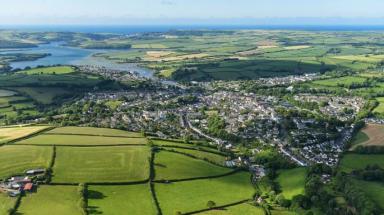
This spring I had the good fortune to visit Kingsbridge, a small market town in South Devon. The town sits on a steep hill overlooking the many-branched estuary, and it is home to The Shambles (or market arcade) with five Elizabethan granite piers, and a seventeenth-century grammar school (now an excellent little museum).

Of course I popped into the church – St Edmund King and Martyr on Fore Street was largely rebuilt in 1414, then restored and extended in 1849 and 1896. What caught my eye there was an inscription on a tablet just outside one of the doors of the church, which inspired a twitter thread which in turn has become the basis of this post.

DSC02051

What does this rather colourful epitaph mean, and what can it tell us about the early modern world? Continue reading

The Living, the Dead and the Very Very Dead: Ethics for Historians

Laura Sangha

Students of history are no strangers to ethics. Indeed, universities have ethics committees and policies which cover instances where the conduct of research involves the interests and rights of others. For historians, this usually means that they must reflect on the possible repercussions of their research on the living – particularly those relatives, friends, descendants and other groups or communities otherwise connected to the subjects that the historian writes about. Indeed, many ethical statements produced by historians concentrate on the interests and rights of the living – for examples see the Royal Historical Society statement on ethics, or the American Historical Association ‘Statement on Standards of Professional Conduct’.[1]

But I don’t work on the living.

I work on the dead. In fact, I work on the very very dead. People who died at least 300 years ago, and in some cases half a millennium ago. And since the dead don’t have any human rights for a while I was rather dismissive of ethics policies. They were for modern colleagues working on the recent past.

Yet eventually I came to think differently. Continue reading

A Page in the Life of John Dane: A Tailor Tempted by Dancing

[In our series ‘A Page in the Life’, each post briefly introduces a new writer and a single page from their manuscript. In this post, Brodie Waddell offers a glimpse of the autobiography of a tradesman and emigrant who struggled to resist a variety of worldly temptations.]

Around the year 1630, a headstrong young tailor named John Dane decided to defy his godly parents and ‘went to a dansing scoll to larne to dans’. When his father found out, he was soundly beaten. So, Dane resolved to leave the family home behind and set out across Hertfordshire.

When he sat down to write his autobiography over fifty years later, he described what happened next: Continue reading

A Page in the Life of Elizabeth Jeake: unfeigned love among mercantile matters

[In our mini-series ‘A Page in the Life’, each post briefly introduces a new writer and a single page from their manuscript. In this post, Anne Murphy offers a loving letter from a seventeenth-century merchant’s wife, who Anne has discussed in more detail in a recent article and whose letters will be included in a forthcoming edition.]

I first encountered Samuel Jeake through his Astrological Diary, edited by Michael Hunter and Annabel Gregory. As the only ordinary investor in the financial revolution of the 1690s who had left a record of his actions, he formed an invaluable case study for my PhD.

Later, when I needed a sample module to talk about at job interviews, ‘The Jeakes’ seemed a perfect fit. A module exploring the seventeenth century through the eyes of an ordinary family looked great presented on one side of A4. When I got a job and actually had to start teaching the module I quickly realised I was going to need much more than was contained in the diary, so I turned to the family’s letters. There are hundreds of them preserved in the East Sussex Record Office and the Rye Museum Archive.

And the more I read, the more I realised the family, especially its female members, offered fascinating insights into early modern life. I encountered Frances Hartridge, Samuel’s mother, who resisted marriage and insisted on a contract before agreeing to a betrothal. Then came Barbara Hartshorne, his mother-in-law, who struggled to keep her teenaged son from the gallows, a task that left her ‘afflicted tormented without any relief’.[1] And there was Samuel’s wife, Elizabeth Hartshorne, a thirteen-year-old bride, whose labour was essential to every aspect of the marital economy. For this post, I have chosen to focus on a page in Elizabeth Hartshorne’s life.

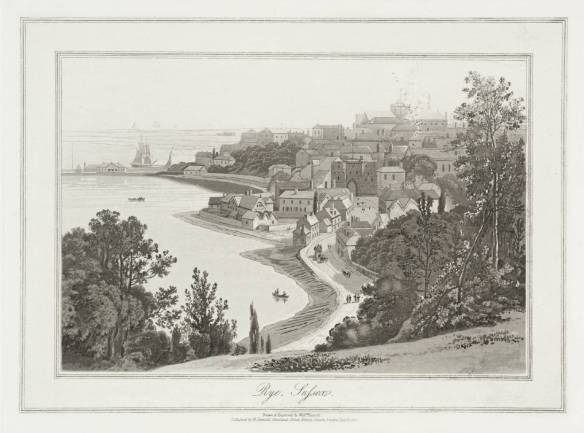
Rye, Sussex null by William Daniell 1769-1837

The Jeakes’ hometown of Rye, from William Daniell, A Voyage Round Great Britain (1815-25)

In the absence of her own writings and her virtual absence from the many pages of Samuel’s writings,  Elizabeth’s life can only be reconstructed from the letters she left behind, both those she wrote and those she received. Much can be recovered from these letters. Like most early modern correspondence, they covered a wide variety of topics. Family matters sat easily alongside business and were generally intertwined with spiritual contemplation, an ever-present concern for the health of all correspondents and their connections, and the exchange of news, especially on religious or political matters. Yet, emotions have been somewhat harder to find. The Jeakes rarely wrote of love and never exchanged letters just for the sake of being in touch. Continue reading