
Laura Sangha writes: I am delighted to introduce a very special pair of posts written by guest blogger Robyn Noble. Robyn currently works at the London Palladium but not so long ago she was studying for her BA in History and Philosophy at the University of Exeter, where I had the great fortune of teaching her sixteenth- and seventeenth-century religious history. Robyn and I have stayed in contact since her graduation and recently we have been discussing her exploration of her family history. Fascinating in isolation, it became clear that Robyn’s research touched on many of the regular themes discussed on the many-headed monster, particularly relating to life-writing, history from below, and social identity. Robyn was enthusiastic when I suggested that she should write something about it for the blog, and these two posts (the second part will be published tomorrow) are the result. Whilst not an early modern life, by drawing on and contextualising one extract from her great-grandfather’s journal, Robyn’s posts complement our ongoing ‘Page in Life’ series, since it explores a text that tells the story of a life in a self-conscious way.
Robyn Noble
Last year, whilst researching my grandfather, an Indian man whom I never knew, I stumbled upon his whole extended family. An avid diary writer myself (I have filled nineteen notebooks in just under ten years), I was ecstatic to learn that my great-grandfather, Bharat Chandra Nayak, kept a diary which he wrote in every day. These diaries went on to form the basis for his published memoir, a book which my new-found family assured me would shed a lot of light on these relatives I had just discovered.
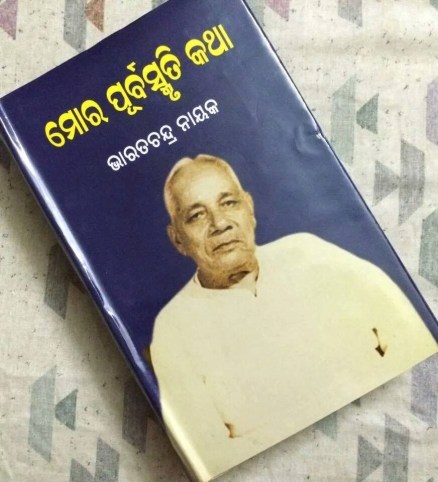
Bharat’s memoir, Mora Purbasmruti Katha (Tales of My Past Recollections) was written in 1964, and in 1967 it went on to receive the Orissa Sahitya Academy Award as a work of high literary value. As well as an autobiography, it is also a travelogue and a description of the social, political and economic circumstances in India throughout his life. In many ways, it is also an ode to topics very dear to him, including higher education for all members of Indian society, female emancipation and social reform in general. As it is written in Odia (or Oriya), the predominant language of the state of Orissa in which my extended family live, I am sadly unable to read the book myself, but I have slowly been receiving English translations of certain passages from various members of the family. The first passage I received throws light on one of the great family mysteries: why it is that my grandfather, Bibhu, had the surname ‘Dash’ as opposed to the family surname ‘Nayak’? Continue reading

 the many-headed monster