[In our mini-series ‘A Page in the Life’, each post briefly introduces a new writer and a single page from their manuscript. In this post, Amanda E. Herbert (@amandaeherbert) introduces us to a diary-writing woman and her extraordinary relationship with a female friend. Amanda has explored the diary in more detail in her new Gender & History article, ‘Queer Intimacy: Speaking with the Dead in Eighteenth-Century Britain’, and her book on Female Alliances.]
Sarah Henry Savage (1664-c.1751) had a very hard time making friends. A middling-sort Nonconformist from Cheshire at the turn of the eighteenth century, she lived at the edges and borders of early modern life: financially, spiritually, socially, and geographically, Sarah Savage didn’t – and sometimes, deliberately chose not to – fit into the traditions and standards which governed her society.[1]
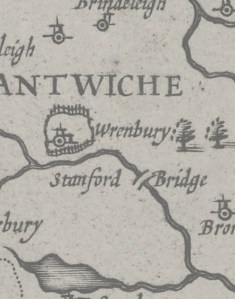
Sarah Savage’s hometown of Wrenbury in Cheshire on John Speed’s map of 1614
But Savage had one great friend: Jane Ward Hunt. Hunt and Savage shared a social network, a common faith, a sense of family by fostering children at one another’s homes, and perhaps most importantly, their time: in Savage’s papers, she recorded that the women exchanged visits, walks, sermon-notes, meetings, and countless letters over the course of their friendship. Savage and Hunt shared what I have termed a ‘queer intimacy’: a relationship which distorted traditional gender roles and gendered writing practices, and which was imbued with love, longing, and same-sex desire, with its many nuances, silences, and degrees of feeling. Savage’s and Hunt’s bond was particularly and peculiarly shaped by spiritual strangeness: religious dissent, and its concomitant refusal to conform, its celebration of difference.
When Jane Hunt died unexpectedly in early middle age, Savage was utterly bereft. She wept constantly. She suffered from insomnia and, when she did manage to sleep, endured troubled dreams about Hunt and their lost alliance. She wrote guiltily in her diary that she felt she was mourning excessively, but could not control her emotions; although she believed that she ‘should lay aside every Weight that would hinder my joy’, Savage noted sadly, this was an impossible task, for ‘well may this world be stiled a vale of Tears’.[2]