
Our latest Postgraduate and Early Career Takeover post is by Jordan Baker. Jordan concentrates his research and writing on the history of the Atlantic World and blogs about history at eastindiabloggingco.com.
In early modern Europe, people believed in many things that modern readers would find fanciful. One of the most striking examples of this type of early modern thought is the study, and fascination with, monsters. From three-headed beasts to strange creatures of the deep, European audiences readily consumed tales of monstrosity. But what exactly were these monsters?
Occasionally creatures called monsters were exotic species or animals with imposing figures (like whales); sometimes monsters were simply creatures from myth, like satyres or centaurs. Usually, however, what early modern people deemed ‘monsters’ were simply animals or people who suffered from a genetic abnormality.
Seen throughout the Middle Ages, and even into the Renaissance, as acts of God, monsters and monstrous births fascinated early modern Europeans. While some earlier thinkers had attempted to pinpoint what caused the occurrence of monsters, in the seventeenth century at least one author sought an explanation that did not rely on ‘the glory of God.’
Fortunio Liceti and Monsters as Natural Phenomenon
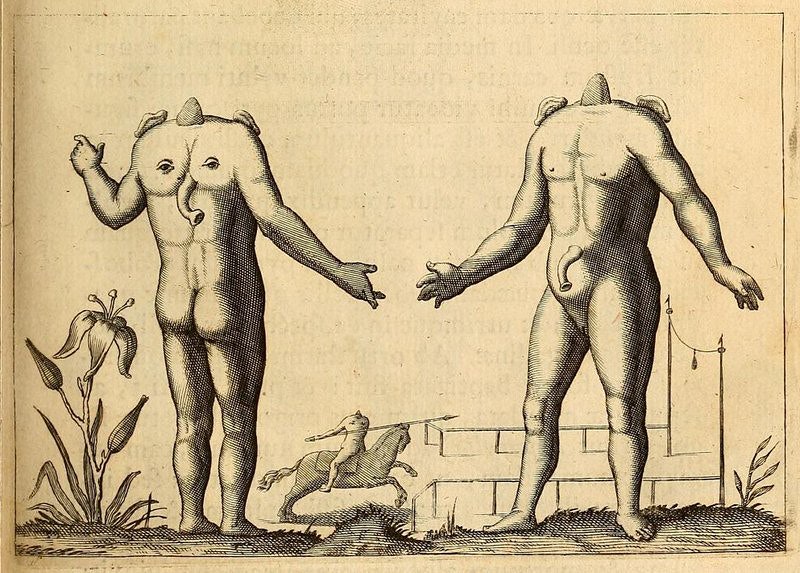
Interest in monsters had been growing for centuries when one of the men most commonly associated with these texts, Fortunio Liceti, penned his seminal work on the topic. While Liceti does not seem to have studied monsters ‘in the field,’ so to speak, he was an avid collector of the illustrations and studies made by others. And though much of his work still included elements that we would consider fantastical, like a headless person with eyes in their shoulder blades, he made the first attempts to categorize monsters as something completely natural.


 the many-headed monster