We are pleased to introduce the latest post in the Postgraduate and Early Career Takeover, by Claire Turner. Claire is a second-year PhD student at the University of Leeds whose research investigates sensory experiences and perceptions of the plague in seventeenth-century England. (Twitter: @_claire_turner_)
During a plague outbreak in London in 1625, tailor George Bicker-staffe was making his way to the Lord Windsor’s house in Mugwell Street when he suddenly heard ‘a great noyse’ which ‘came ratling downe the Stayres’. The noise had been produced by a fawn which, having once been tied up in the garden, had now got loose and was causing chaos in the Lord Windsor’s house. Bicker-staffe had been left ‘half breathelesse, and almost speechlesse, looking very ghastly’ after his ordeal. Several days later, having previously been in good health, he became unwell. Then, a mere eleven days after the event involving the fawn, Bicker-staffe died of the plague [1].
George Bicker-staffe’s strange and frightful experience was one of many to take place during London’s seventeenth-century plague outbreaks. His ordeal was used in medical texts to highlight the idea that feelings of fear increased the body’s susceptibility to contract the plague. Upon hearing the unidentifiable noise, Bicker-staffe inadvertently set in motion a process whereby his body underwent catastrophic emotional and physiological changes. This account is one of several to shed light on the dangerous and perilous nature of sounds heard during outbreaks of plague. It introduces us to the idea that sound was believed to indirectly impact the physiology of the human body.
Have you ever experienced illness through your ears? What noises and sounds do you hear when you or someone you know is ill? Pestilential soundscapes were the landscapes of sound produced during plague epidemics. The people who lived through London’s plague outbreaks experienced a huge variety of sounds, each of which affected how they understood the world around them. From the constant sounding of death knells to the screams of plague victims and their relations, the soundscapes of plague epidemics reveal fascinating insights into how people navigated the city during times of crisis. In this post, we’ll explore precisely how the sense of sound could be intimately linked with contagion in the early modern period.
If you were to travel back to a plague outbreak in London, one sound you were likely to hear would be the suffering of plague victims. Numerous accounts detailed the various instances when plague victims might be heard vocalising their pain and anguish. Several of these accounts took place in one particular spot: the window. Early modern windows were only occasionally fitted with glass. In many instances, they were instead fitted with thin and fragile materials such as paper or fabric. Therefore, unwanted noise travelled through windows with ease. It is unsurprising, then, that windows played a central role in the formation of pestilential soundscapes.
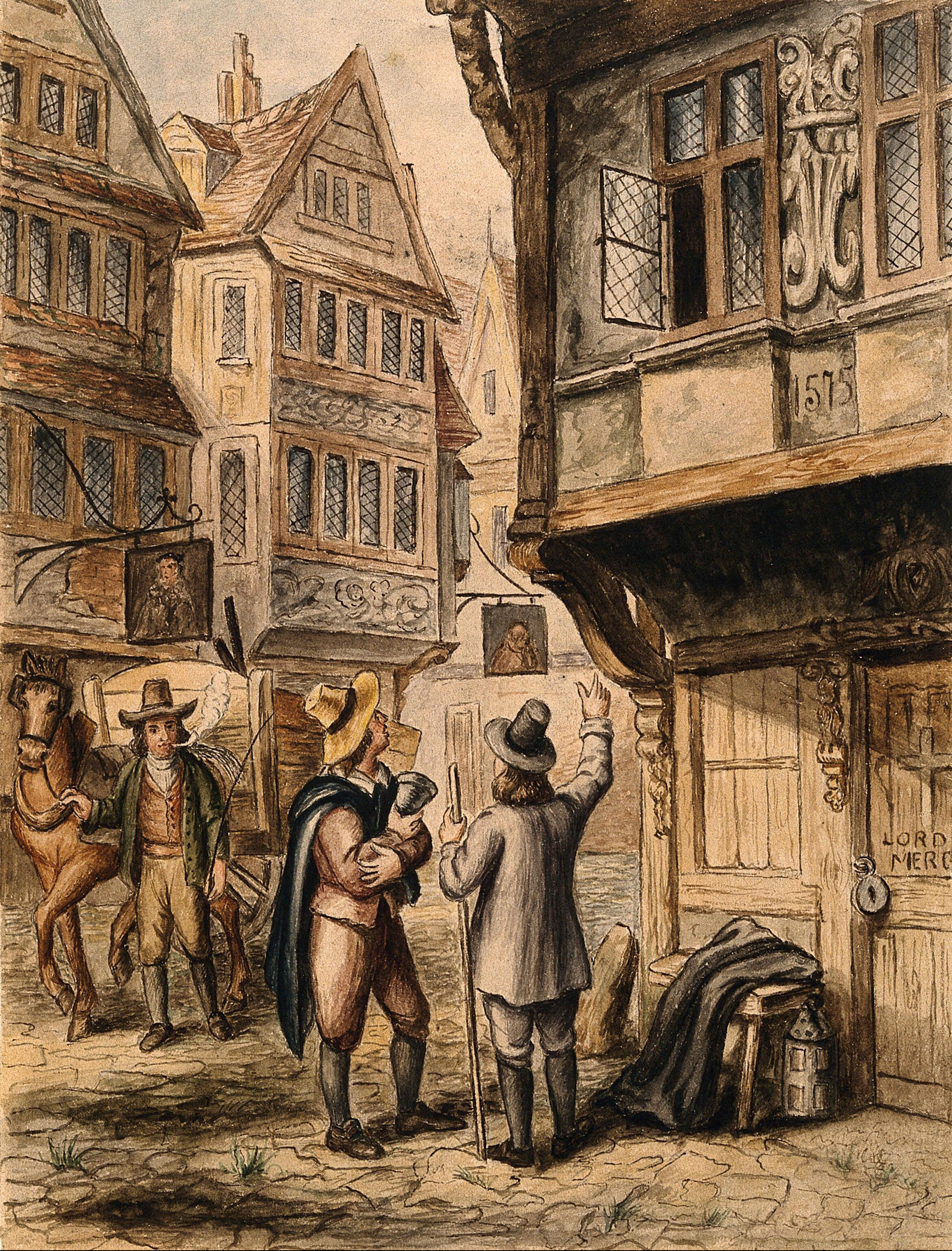
A cart for transporting the dead in London during the great plague. Watercolour painting by or after G. Cruikshank (1792-1878), Wellcome Images.